LATMOS – HERAKLEIA (Kapıkırı)
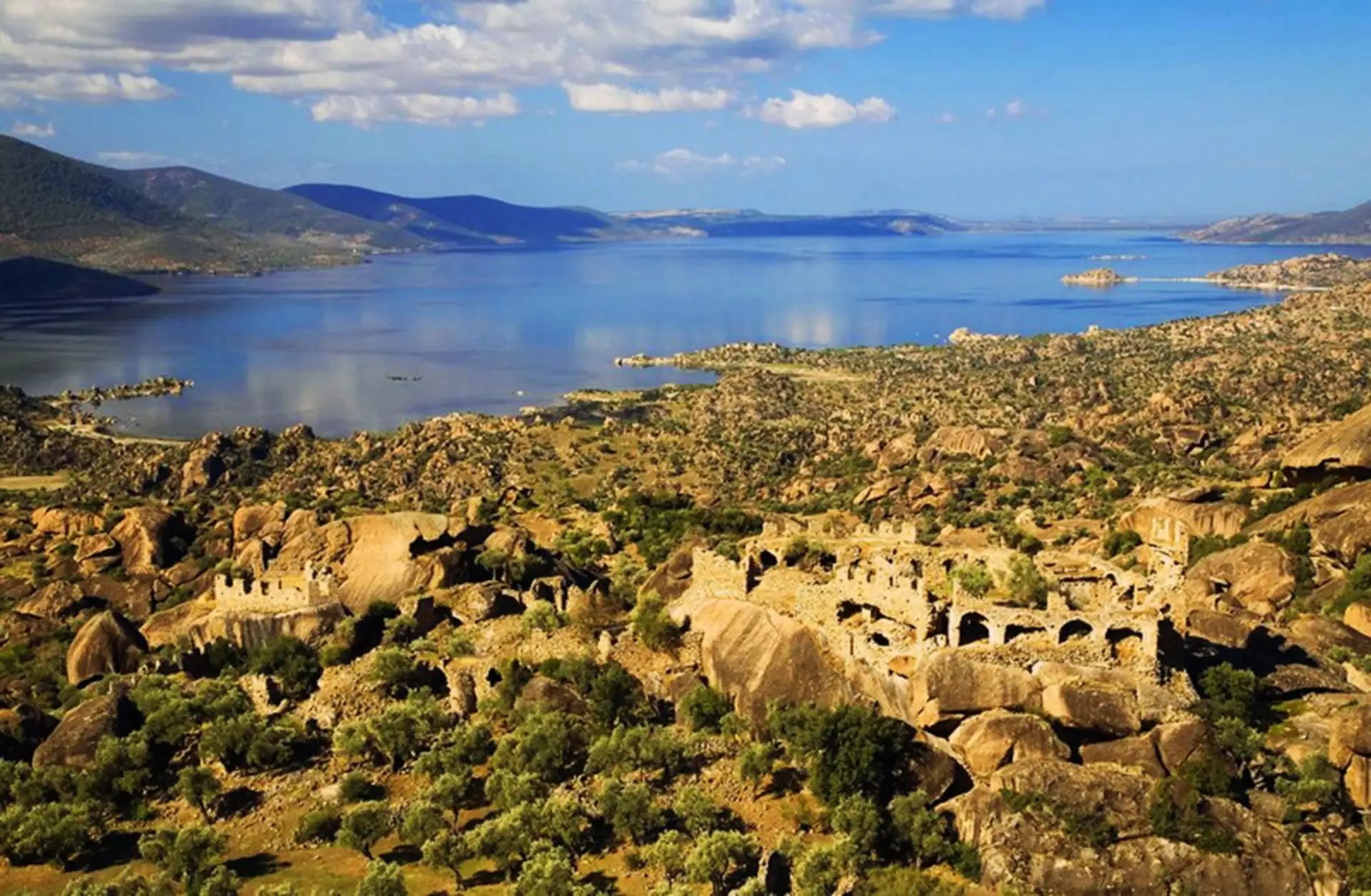
An ancient settlement on the shore of Lake Bafa (former Latmos Gulf), intertwined with the rugged cliffs of the Beşparmak Mountains. Its history extends from prehistoric rock paintings to the legendary myth of the shepherd Endymion.
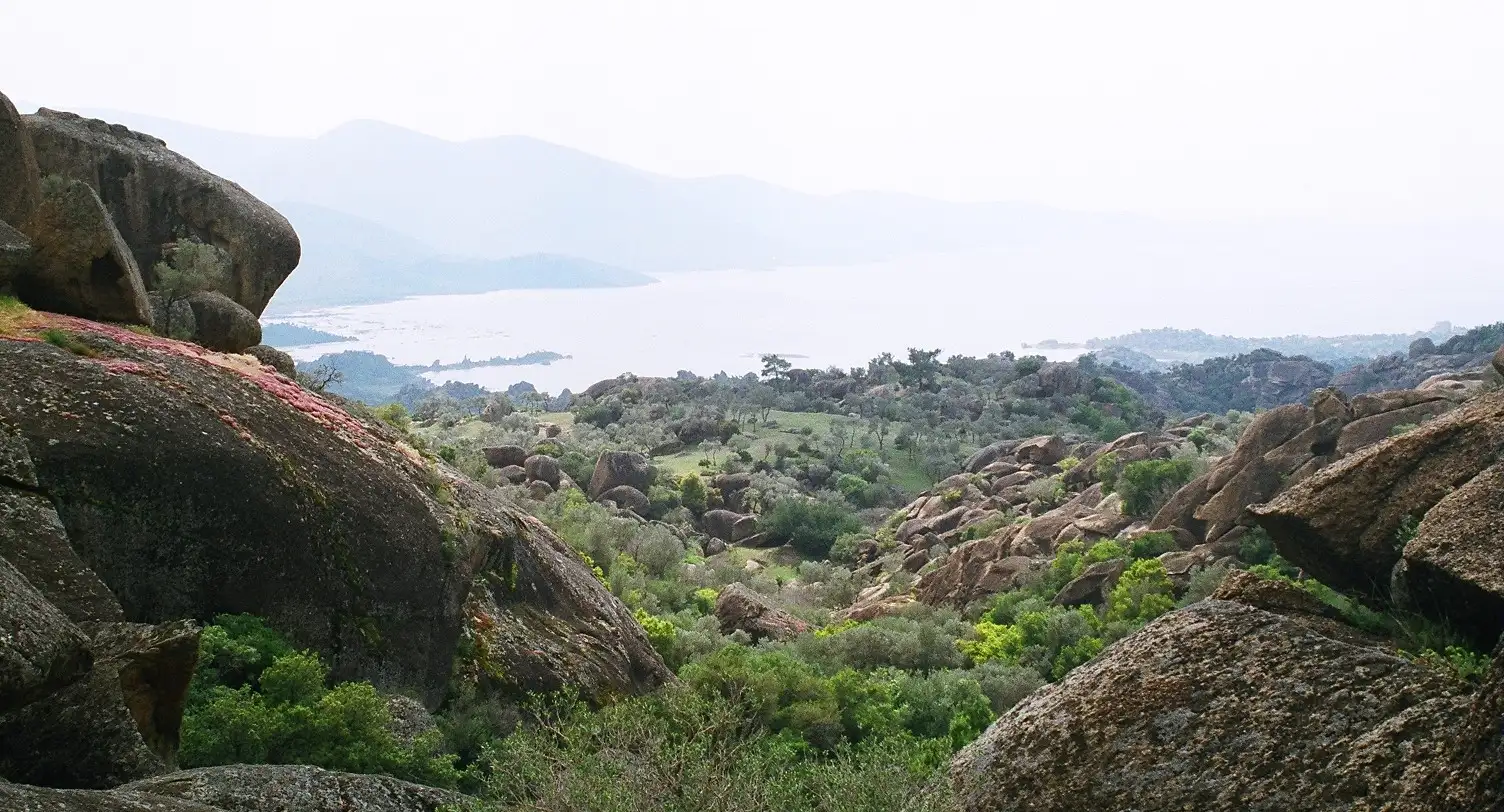
Latmos and Herakleia are at the southwestern foot of the Latmos Mountains (Beşparmak) rising on the shore of the gulf known as Latmos Gulf when Lake Bafa was connected to the sea. As the mouth of the gulf was gradually filled with alluvium brought by the Büyük Menderes River, the gulf turned into a lake.
The first city established here was Latmos. The territory owned by the city was called Latmia. The name of the region comes from the Carians who lived here before the Greeks settled in Anatolia.
The peak of Latmos Mountain has been identified with the cult of the "Rain and Sky God." Rock paintings dating from 8000 to 4000 BC found in rock caves on Latmos Mountain depict worship of the "Rain and Sky God." The rock paintings reflect religious ceremonies of communities consisting of women, men and children, containing no violence such as weapons, hunting or war.
In 2000 BC, Latmos was incorporated into the territories of the Hittite Empire.
Latmos was a member of the Attic - Delian Sea League in the 5th century BC and paid 1 talent in taxes.
Around 300 BC, the city of Latmos was abandoned and the city of Herakleia was founded. When the city of Herakleia was being built, the ruins of the city of Latmos were used, and the old city was used almost like a quarry. The city of Herakleia was connected to neighboring cities by roads paved with large stones. Connections were also made with the main roads in the Menderes and Marsyas valleys. With its location at the rear end of the Latmos Gulf, Herakleia was the last stop for ships coming from the west and the starting point of the land road extending into the interior of the Caria region. At the beginning of the 3rd century, a large part of Caria came under the rule of the Macedonian general Pleistarchos. Pleistarchos made Herakleia the capital of his territory. At that time, the city was named Pleistarkia after the Macedonian general. After his death, the name of the city was changed to Herakleia. Although Herakleia was quite developed in the Hellenistic period, it was somewhat neglected in the Roman Age.
In 200 BC, Herakleia entered the war between Miletos and Magnesia (Kemer) as an ally of Miletos. Before the Battle of Magnesia (Manisa) in 190, Herakleia was in the hands of the Syrian king Antiochus. The Roman general Scipio, who won this battle, promised freedom and autonomy to the city in a letter he wrote to Herakleia's council and popular assembly. Indeed, in the Apamea peace of 189, Herakleia was not given to Rhodes. The city began to mint coins from this date. The main depictions on the coins are: the helmeted head of Athena, the protective goddess of Heracles, Heracles' own bearded head, his club, bow and arrows. The head of a goddess, probably Aphrodite or Artemis, is also depicted.
In this century, Herakleia made an isopoliteia agreement with Miletos. With this agreement, both parties grant citizenship rights to each other, decide on common defense, and mutually abolish transit and customs duties. An agreement with Amyson on a territory issue was also made within this century. In 78 BC, Herakleia recognized the asylia, or immunity right, of the Hecate temple in Lagina and the festivals celebrated there every four years. In 51, it fell into a situation where it could not pay its debt to the Puteoli banker Marcus Cluvius.
In the 7th century AD, many Christian monks and hermits expelled from Sinai and Yemen took refuge in Latmos Mountain, which was considered sacred. They made frescoes of Jesus and the apostles in the caves and rock cavities here. In the Middle Ages, Latmos Mountain became the center of monastic life.
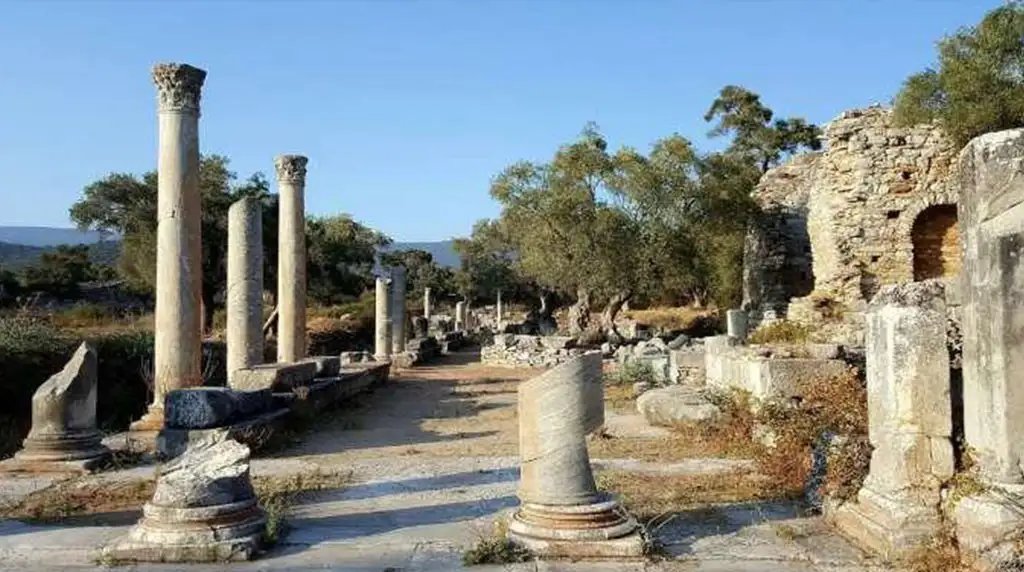
Herakleia is a city built with a regular plan with streets intersecting perpendicularly and rectangular squares.
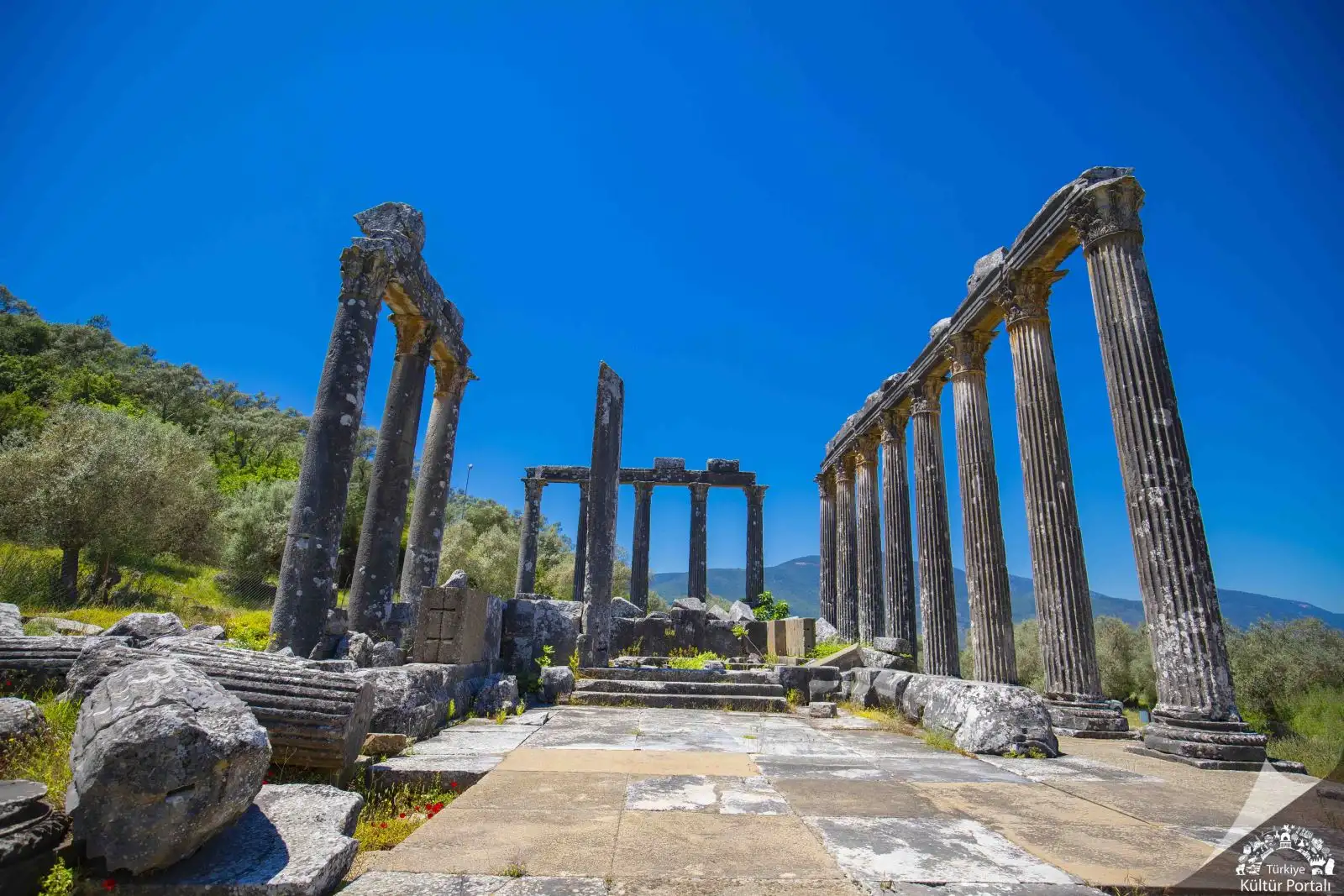
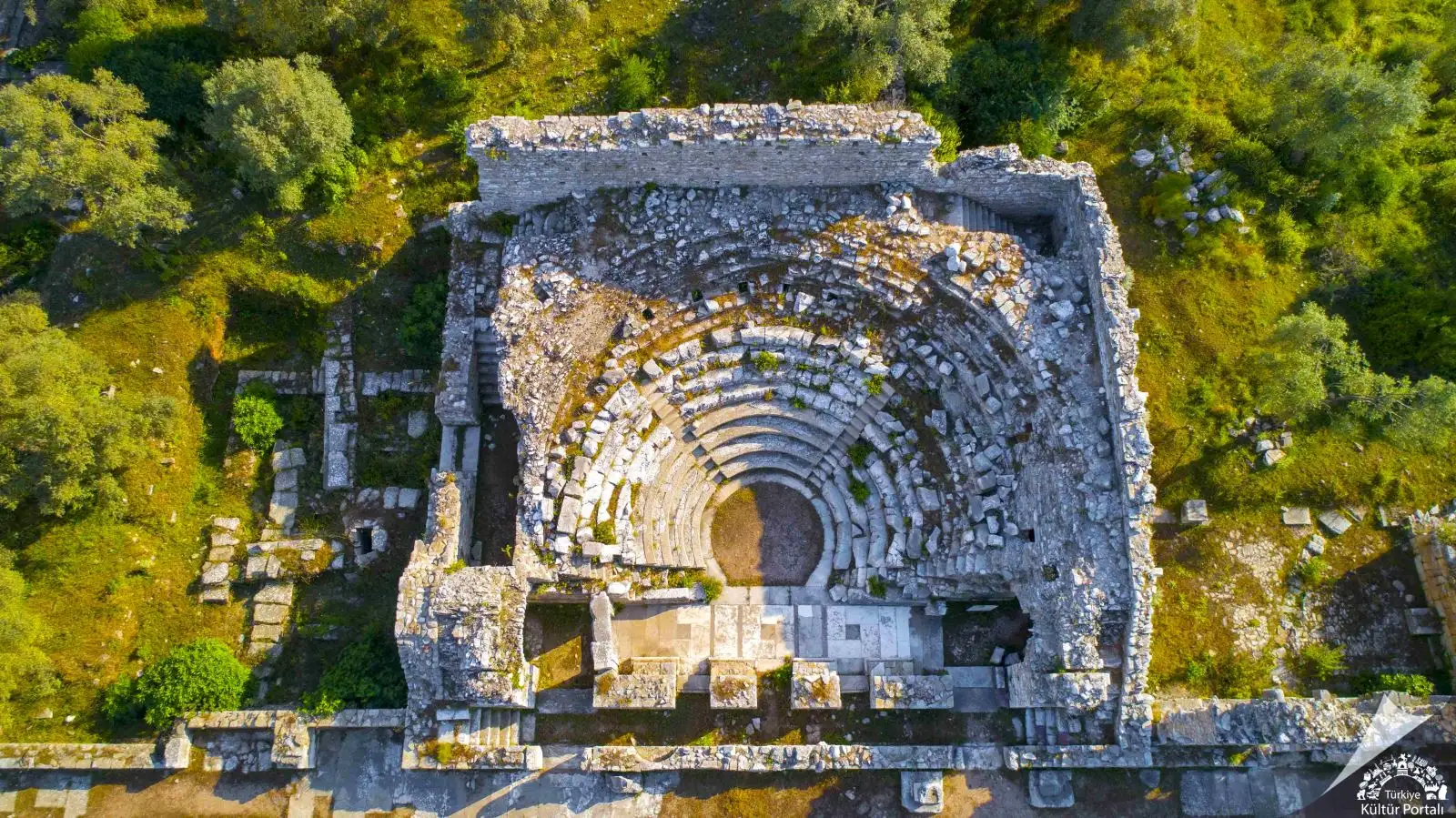
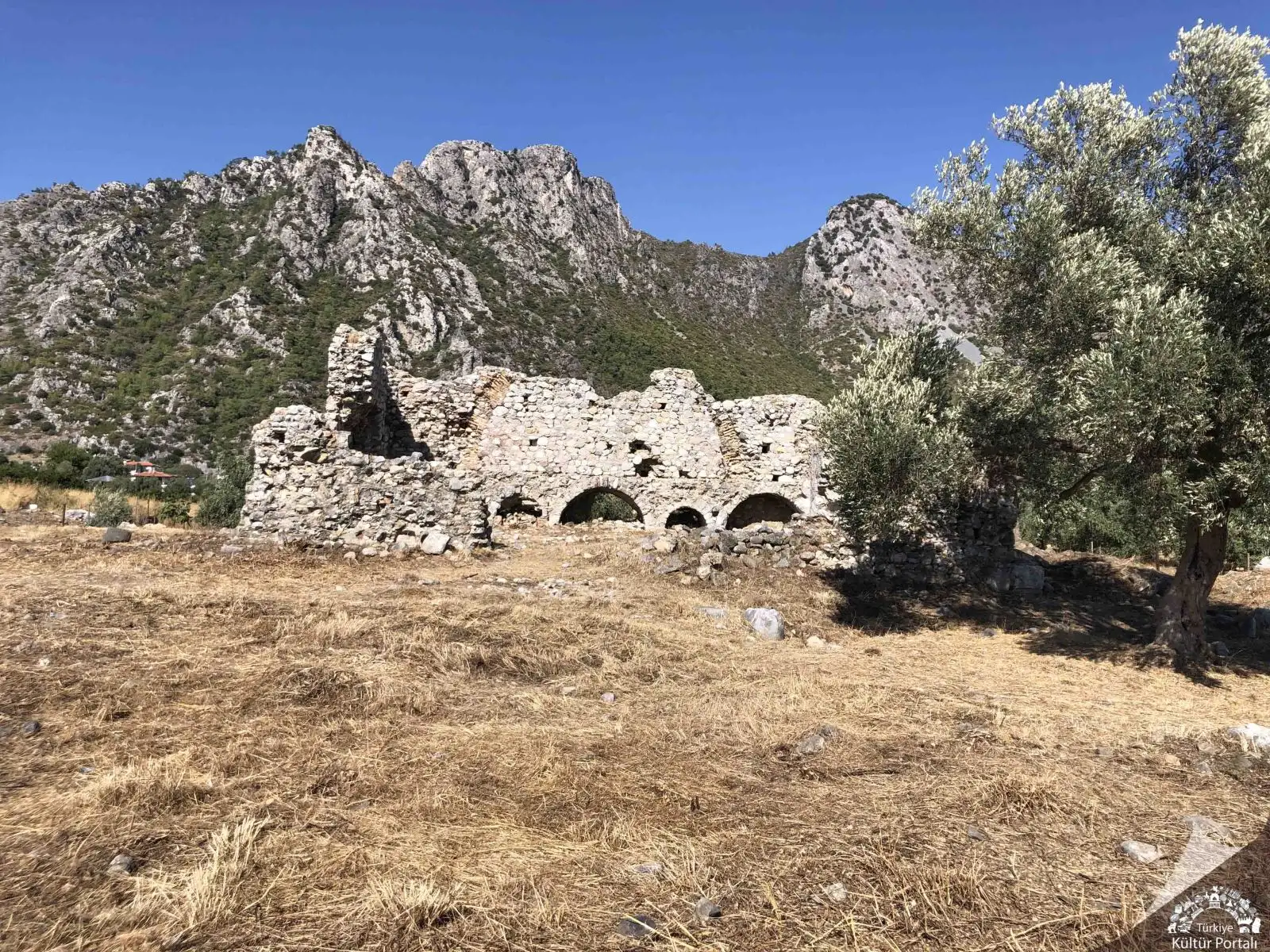
The Athena temple, built during the founding years of Herakleia, is the main temple of the city. The cella wall, made of local gneiss rock and covered with white-painted plaster at that time, still stands with its wall height up to the roof today. In addition, the theater of the city and the nymphaeum, a large fountain square, a little beyond the theater, are still visible. The Endymion temple, of the shepherd who was condemned to eternal sleep due to his legendary love affair with the Moon Goddess Selene in mythology, is also still largely standing.
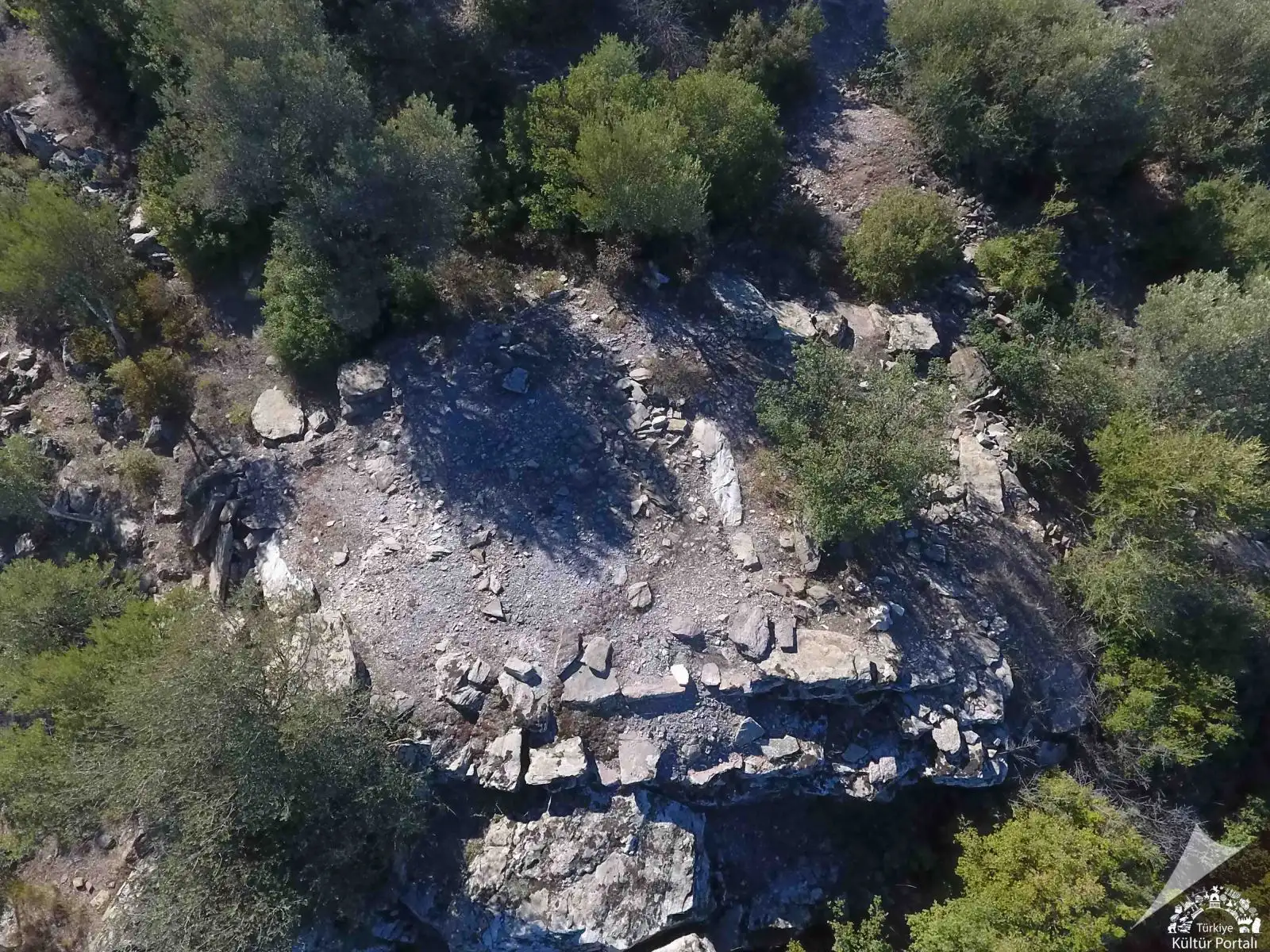
The skillfully constructed walls of Herakleia are noteworthy. However, Latmos, which had no defensive structures until the end of the 5th century BC, was an open settlement. The city was probably surrounded by walls in the first quarter of the 4th century BC. The length of the walls reaches 6.5 kilometers and has 65 towers. The city's defense system consisted of 14 towers and 3 castles, as well as many internal and external structures that also served defensive purposes.
In Herakleia, there are monasteries such as Yediler Monastery, Stylos Monastery, and Soteros Monastery. Near the monasteries, many hermitages were built in caves or rock cavities where monks lived alone. Most of the monasteries were built in the 7th and 8th centuries. In addition, castles and towers were built for the defense of these monasteries. Some of these towers and castles were built against Turkish raids that began in the region in the 11th century. After the Turks dominated the region in the 14th century, the Latmos monasteries were completely abandoned.
Our Historical Cities (15)
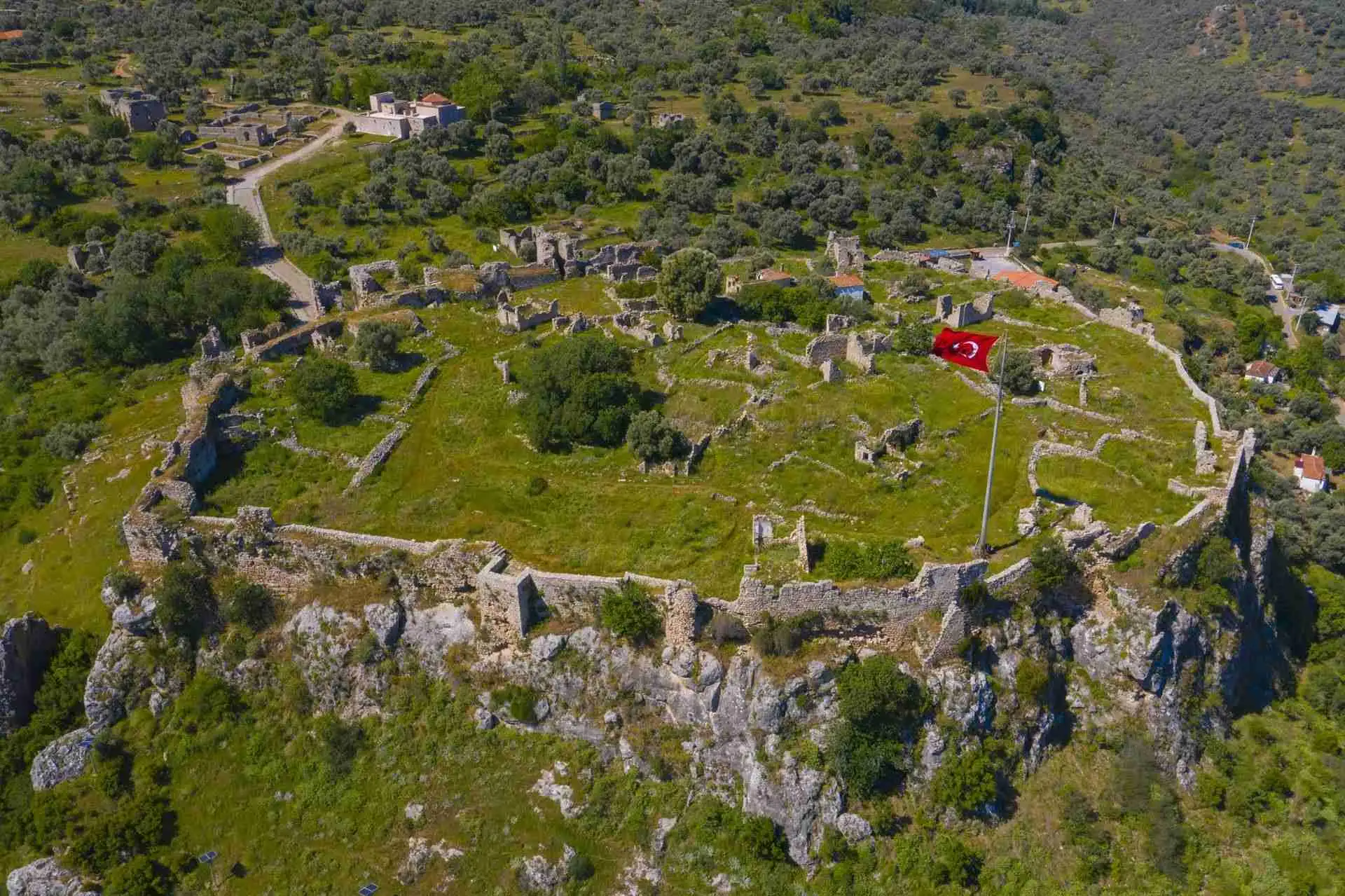
BEÇIN (Pezona, Peçin, Barçın)
A historic settlement rising on a plateau overlooking the Milas Plain, with roots dating back to the Bronze Age. The ancient site served as the capital of the Menteşeoğulları Principality in the 13th century.
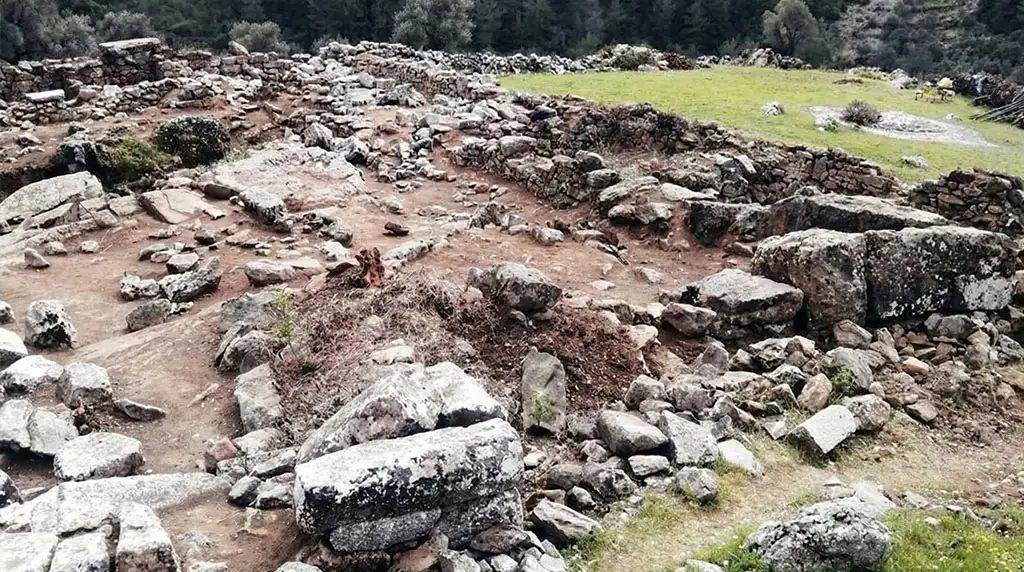
SINURI
A sanctuary built with red marble blocks in the Kalınağıl village of Milas, dedicated to the Carian god Sinuri. An important center of faith since the 4th century BC.
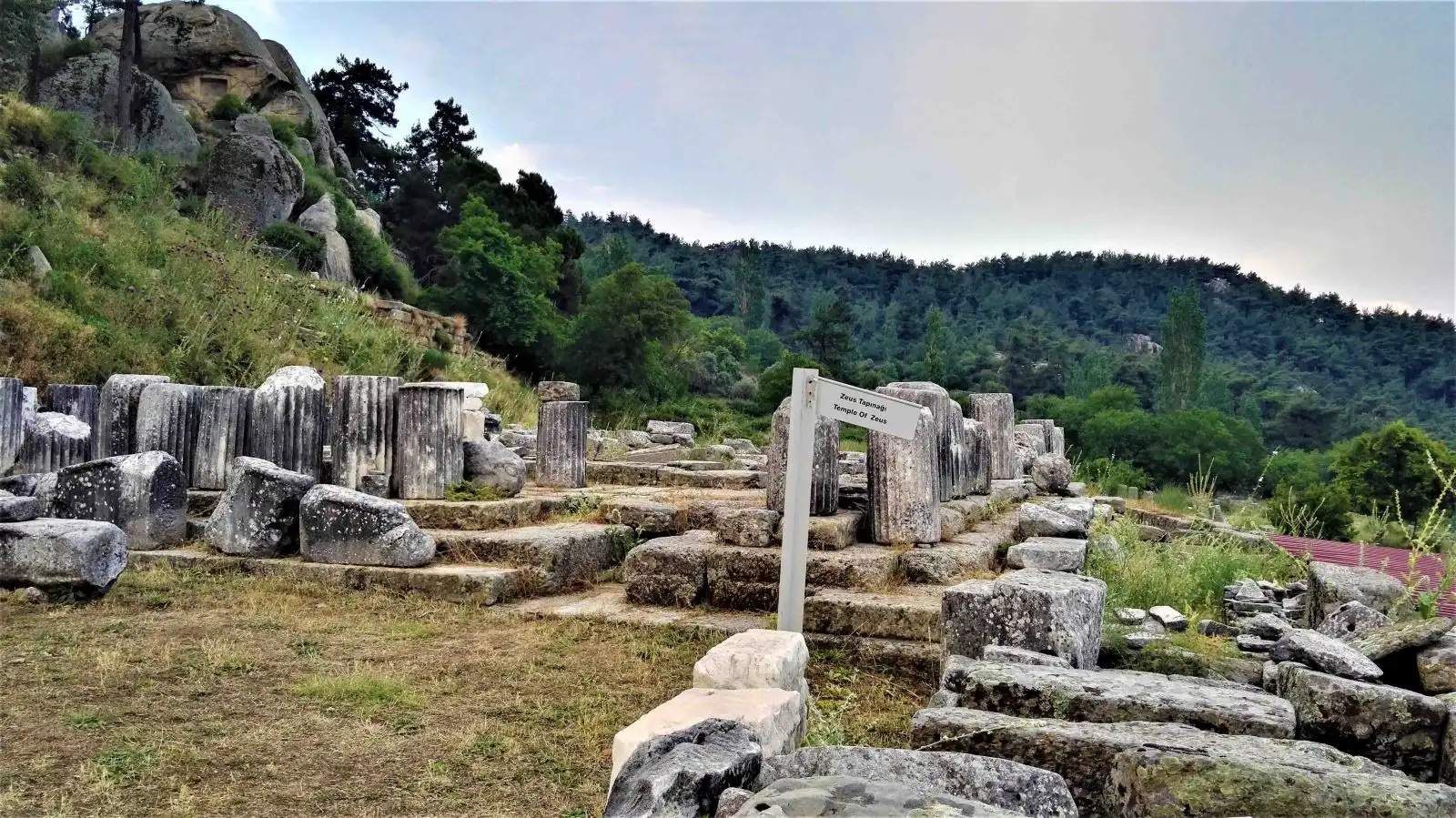
LABRANDA
The most important pilgrimage center of Carian civilization, situated in the mountains north of Milas among pine forests and water sources. Named after the double-headed axe (Labris) motif, connected to Mylasa by the "Sacred Road".
OLYMOS (Kafaca)
An ancient settlement located northwest of Milas, near Kafaca village. The city lost its independence in the 2nd century BC when it merged with Mylasa, known for its temples dedicated to Apollo and Artemisia.
KHALKETOR (Karakuyu)
An ancient settlement founded at the foothills of Karakuyu Mountain, northwest of Milas, which became a member of the Attic-Delian League in the 5th century BC. Known for its strong defensive system with three different fortresses.