EUROMOS (Ayaklı)
An ancient city on the Milas-Selimiye road, locally known as "Ayaklı" due to its magnificent columns. Home to one of the best-preserved temples in Anatolia, dating from the Roman period.
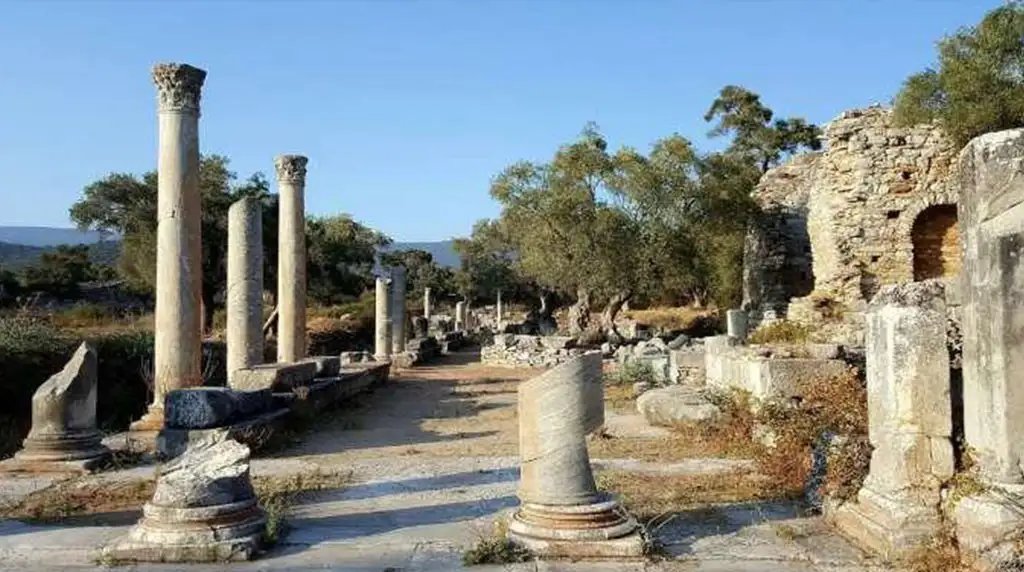
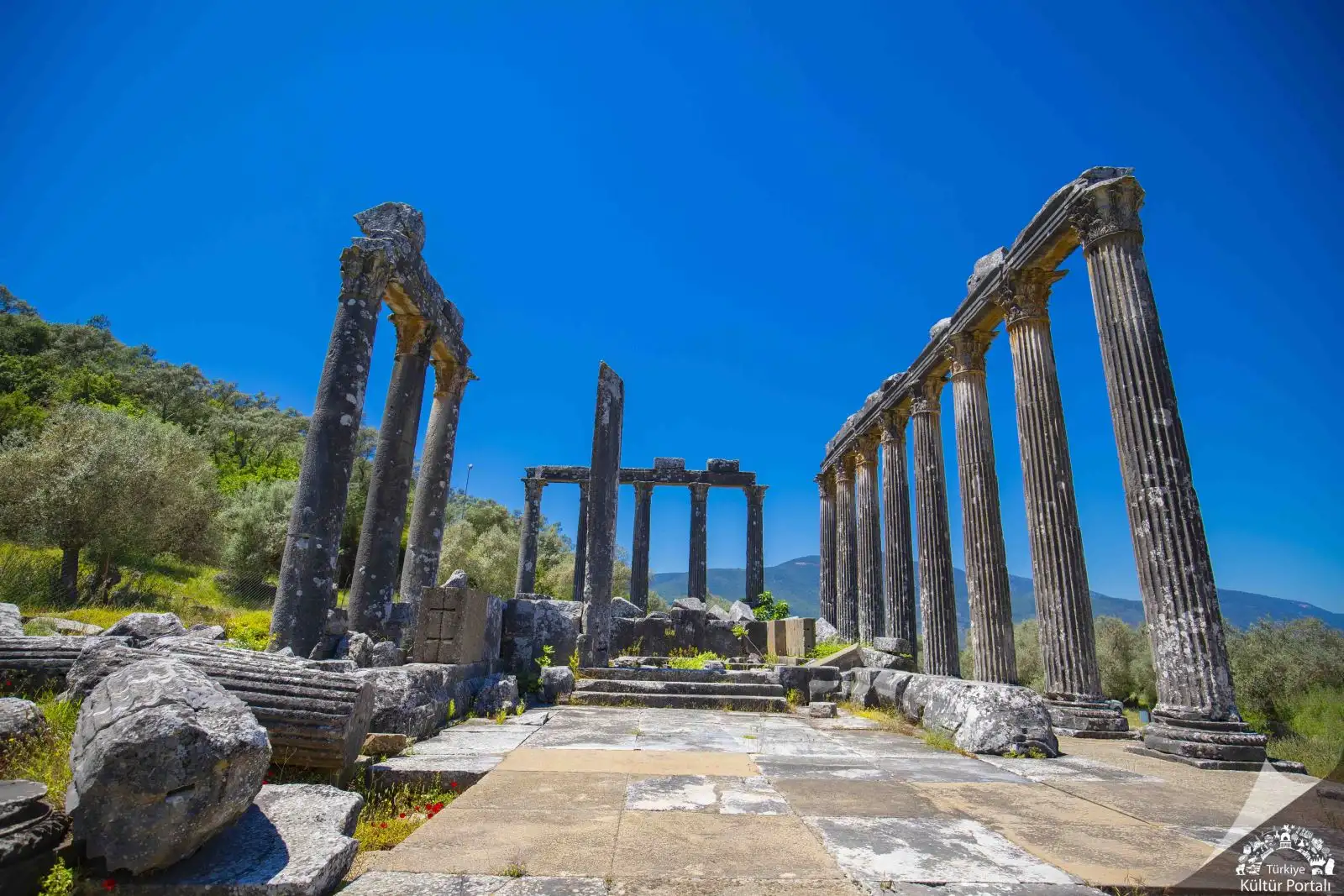
Euromos is located at the 12th kilometer of the Milas - Selimiye road. It has been named "Ayaklı" (with legs) by the local people due to the columns of the Zeus Temple that still stand in all their glory. The Carian name of Euromos is Kyromos or Hyromos.
There is no record in ancient sources about Euromos, which was a member of the Attic - Delian Sea League in the 5th century BC, until the end of the 3rd century. Between 201 - 196 BC, Euromos was under the occupation of the Macedonian king Philip V. In 167 BC, it was attacked by Mylasa, but this attack was prevented thanks to the force sent by Rhodes, which dominated Caria with the Apamea peace. However, after a while, Euromos was forced to make a sympoliteia agreement with Mylasa. With this agreement, while Euromos was free in its internal affairs, it was bound to Mylasa in its foreign affairs. However, Herakleia, considering this agreement a threat to itself, attacked Euromos and plundered the lands of the Euromians, taking the sacred objects from the temple and the personal belongings of the Euromians. The Mylasa authorities, to whom a plundered Euromian applied, resolved the issue with an envoy sent to Herakleia. Later, relations between Mylasa and Euromos deteriorated, and Mylasa demanded 50 talents compensation from the Euromians for not complying with an agreement. Eventually, the agreement between the two cities was completely abolished.
The Zeus temple, built during the Roman Imperial period, has suffered little damage. It is south of the city, outside the walls. The temple is in Corinthian order with six columns on the fronts and nine on the sides, approximately 14 x 19 meters in size. 16 columns still stand in three groups combined with architrave blocks on them. The actual temple building called "cella" has a closed back and a shallow pronaus, or "apron" in front. Since the columns of the temple were built by various people, some are fluted while others are unfluted. There are panels bearing votive inscriptions on all columns on the north and west facing sides. Five of the columns were presented by the physicist and public official Menkrates and his daughter Tryphaina, and seven by another public official named Leo Quintus. The double-headed axe carved as a high relief on marble on the south wall of the temple, and the human ear reliefs on both sides of the axe are interesting.
Euromos minted coins in the 2nd and 1st centuries BC and during the Roman Empire. Coin depictions are Zeus, Dionysus, double-headed axe, eagle and deer.
The chief god of Euromos is a Zeus holding a double-headed axe in his right hand and a spear in his left. Therefore, although he resembles Zeus Labrandos, he differs in the shape of the axe, how he raises it into the air, and his clothing.
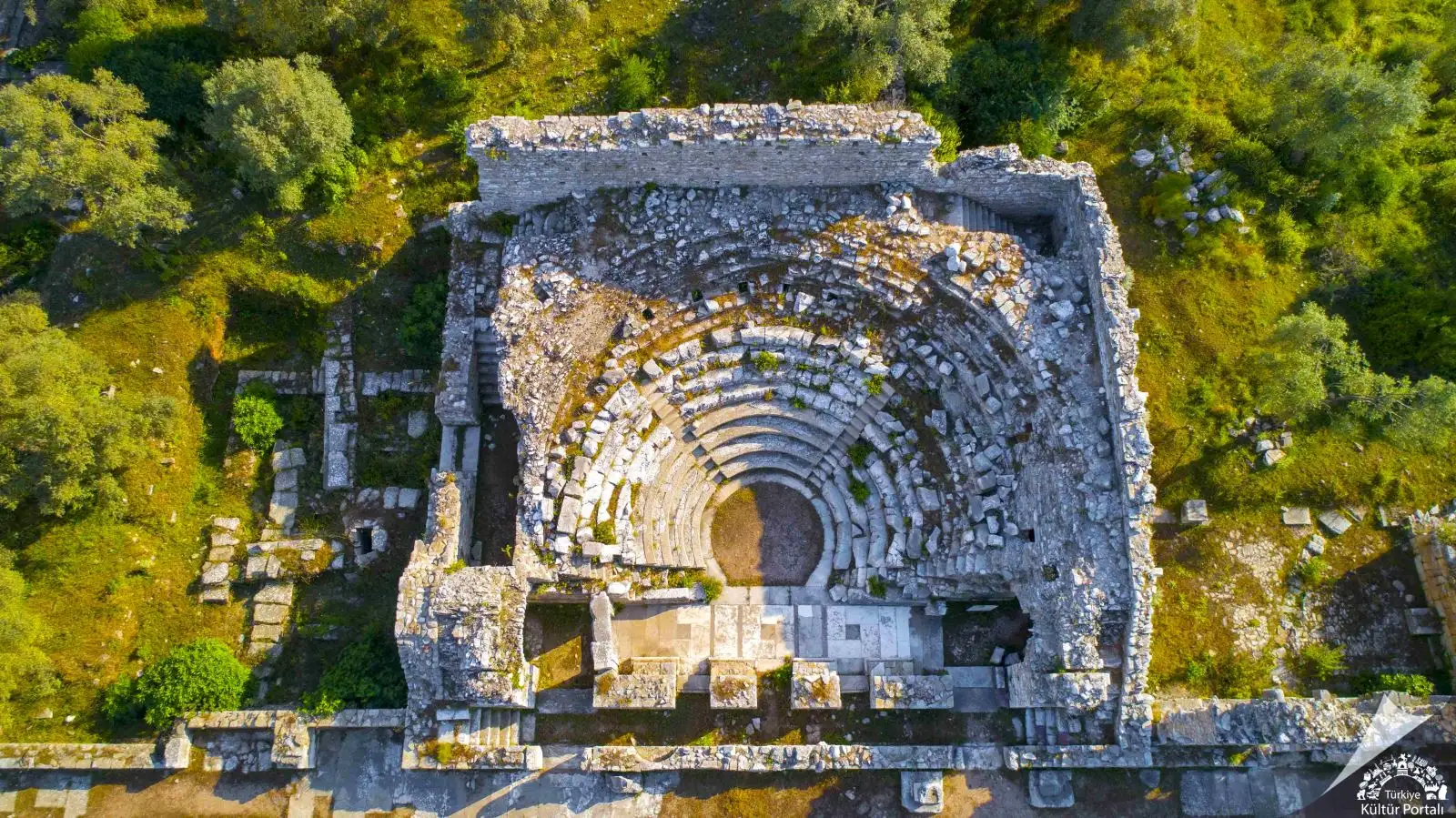
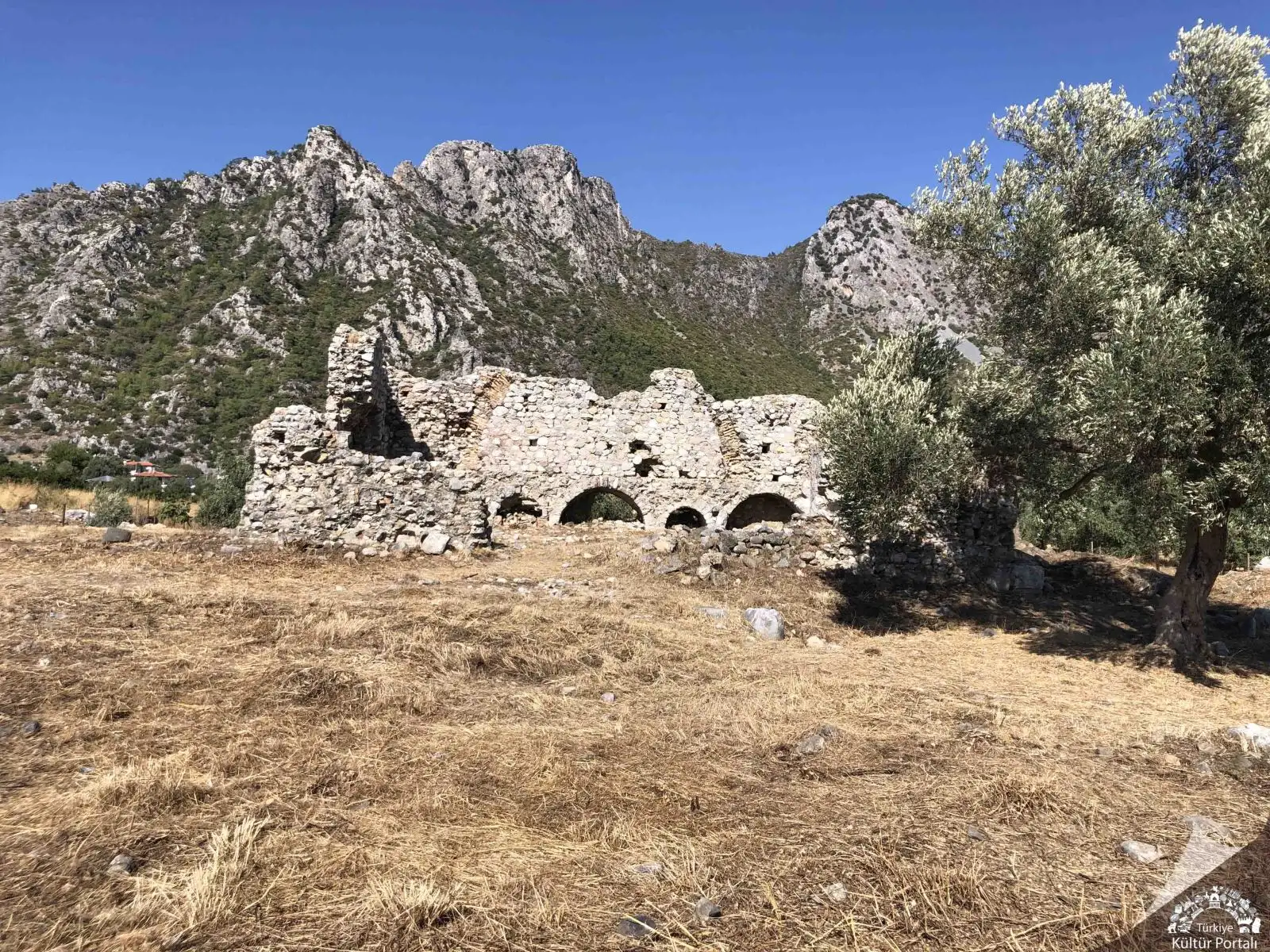
The theater of Euromos, carved into the hillside, is in quite a ruined state. In the flat area in front of the theater, the agora of the city extends to the Milas - İzmir highway.
Our Historical Cities (15)
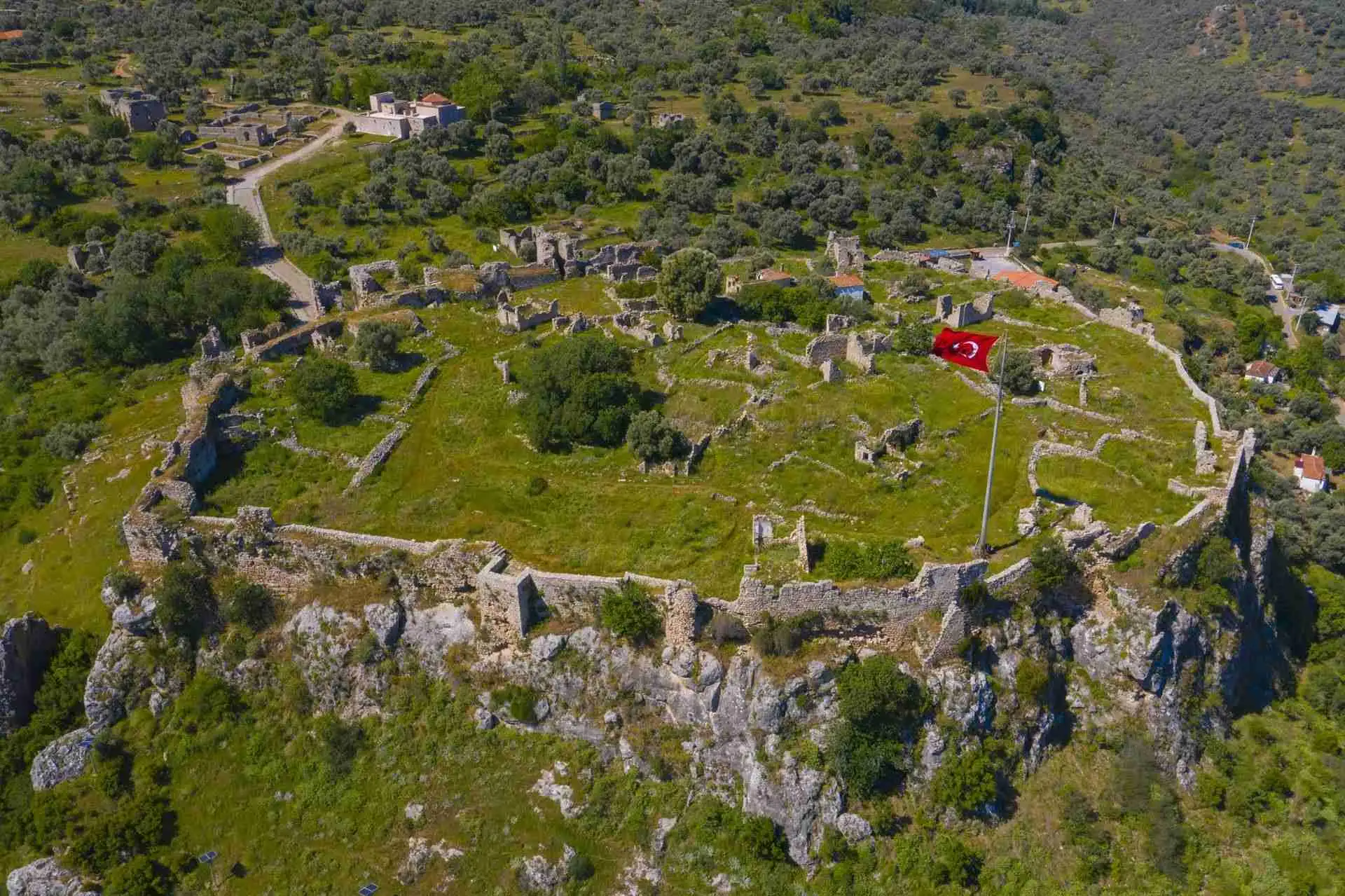
BEÇIN (Pezona, Peçin, Barçın)
A historic settlement rising on a plateau overlooking the Milas Plain, with roots dating back to the Bronze Age. The ancient site served as the capital of the Menteşeoğulları Principality in the 13th century.
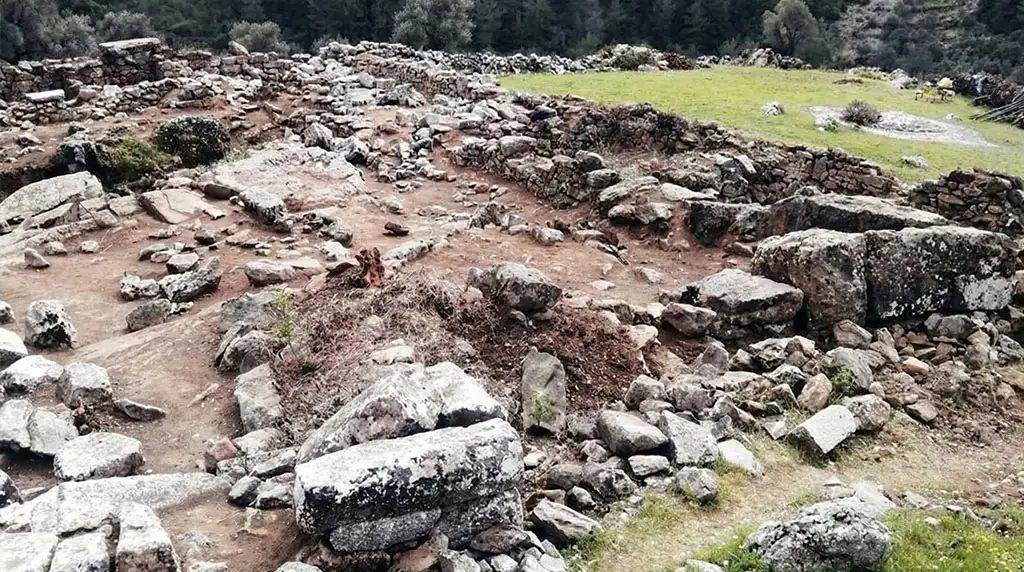
SINURI
A sanctuary built with red marble blocks in the Kalınağıl village of Milas, dedicated to the Carian god Sinuri. An important center of faith since the 4th century BC.
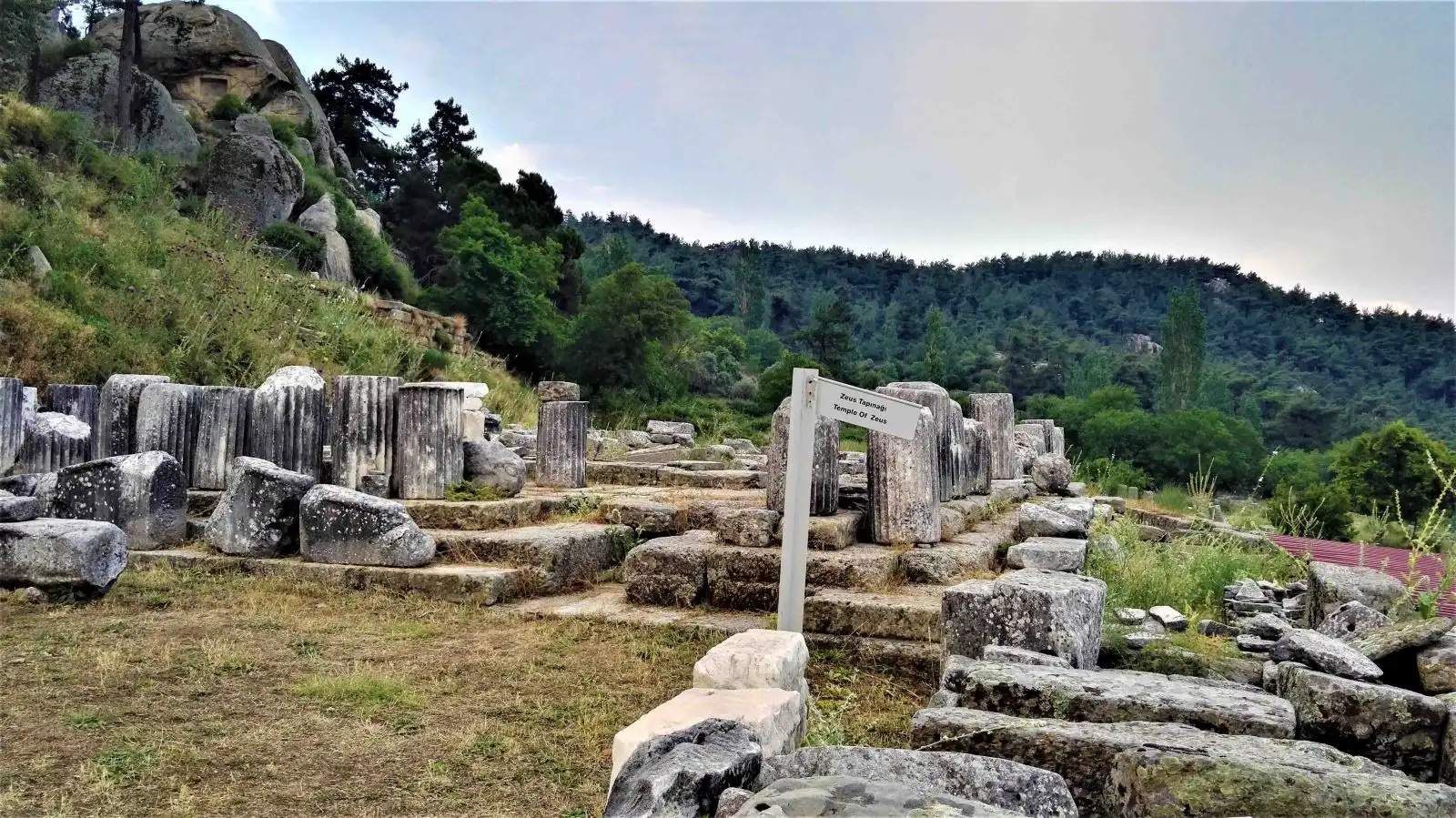
LABRANDA
The most important pilgrimage center of Carian civilization, situated in the mountains north of Milas among pine forests and water sources. Named after the double-headed axe (Labris) motif, connected to Mylasa by the "Sacred Road".
OLYMOS (Kafaca)
An ancient settlement located northwest of Milas, near Kafaca village. The city lost its independence in the 2nd century BC when it merged with Mylasa, known for its temples dedicated to Apollo and Artemisia.
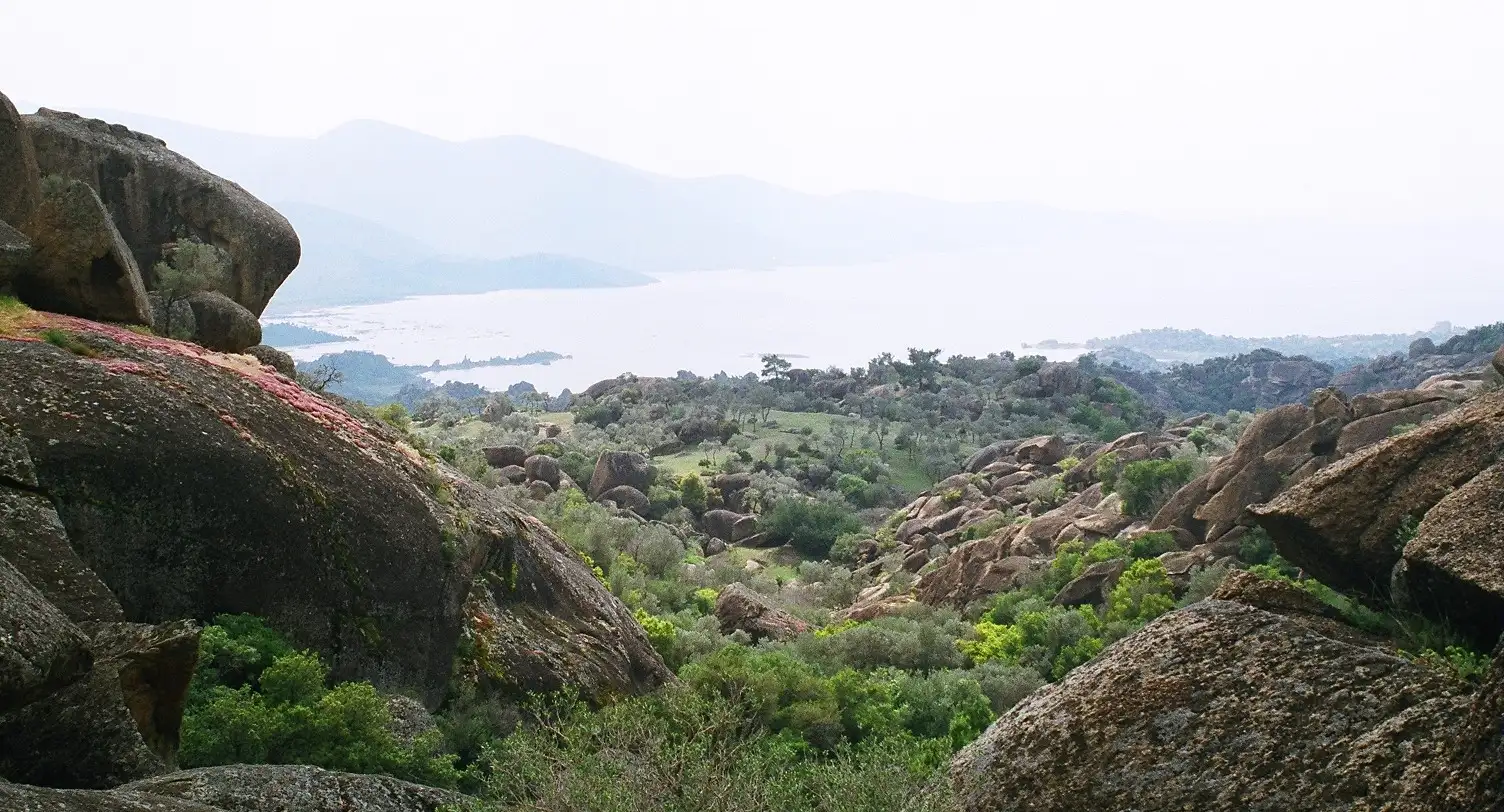
KHALKETOR (Karakuyu)
An ancient settlement founded at the foothills of Karakuyu Mountain, northwest of Milas, which became a member of the Attic-Delian League in the 5th century BC. Known for its strong defensive system with three different fortresses.