LABRANDA
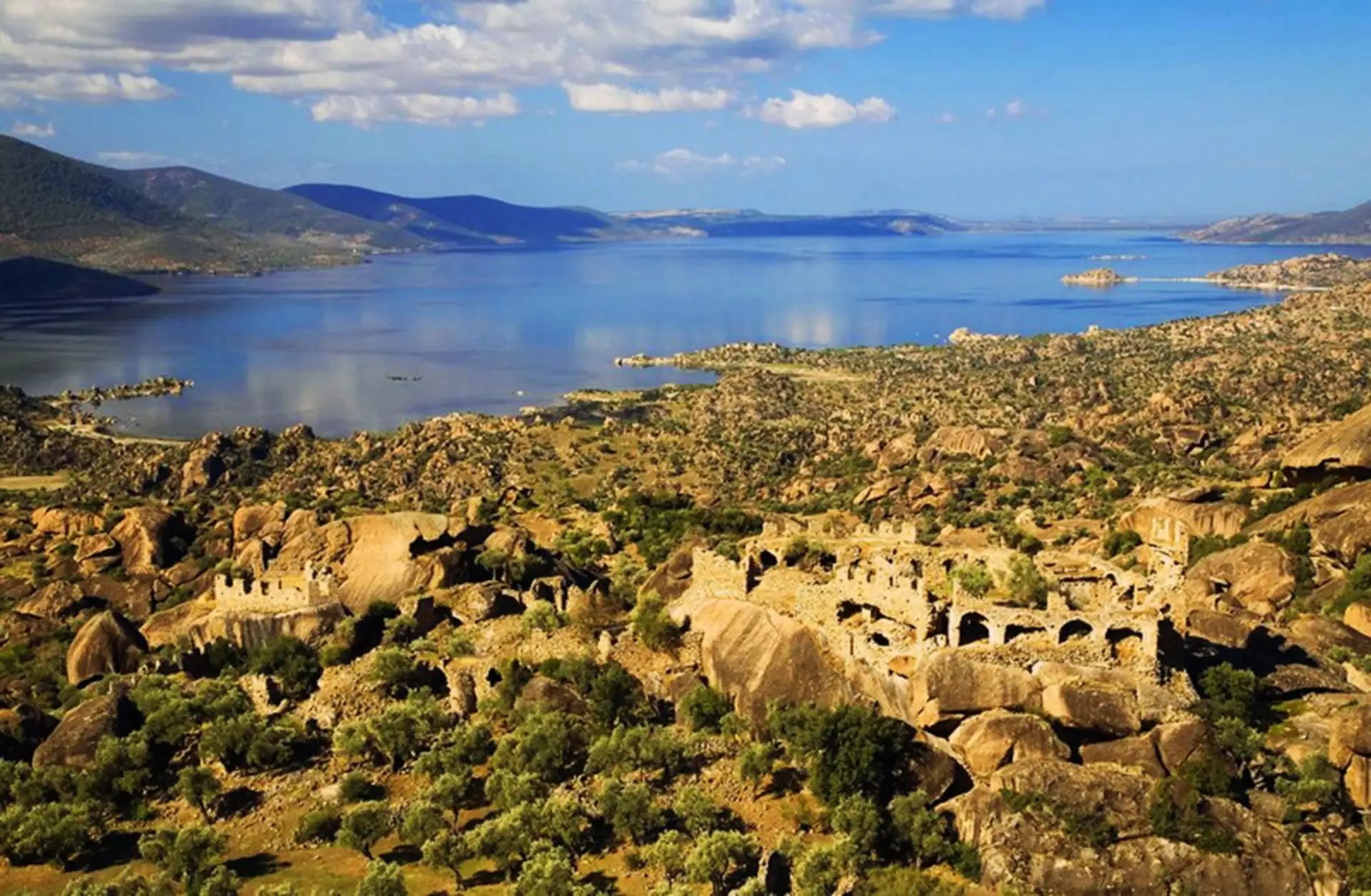
The most important pilgrimage center of Carian civilization, situated in the mountains north of Milas among pine forests and water sources. Named after the double-headed axe (Labris) motif, connected to Mylasa by the "Sacred Road".
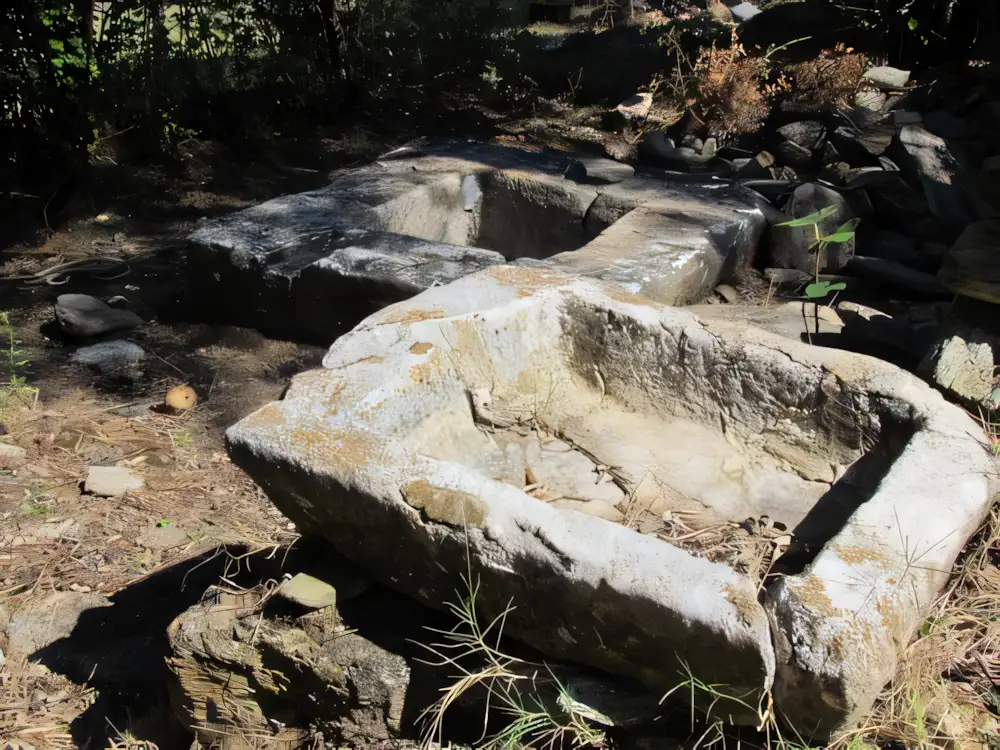
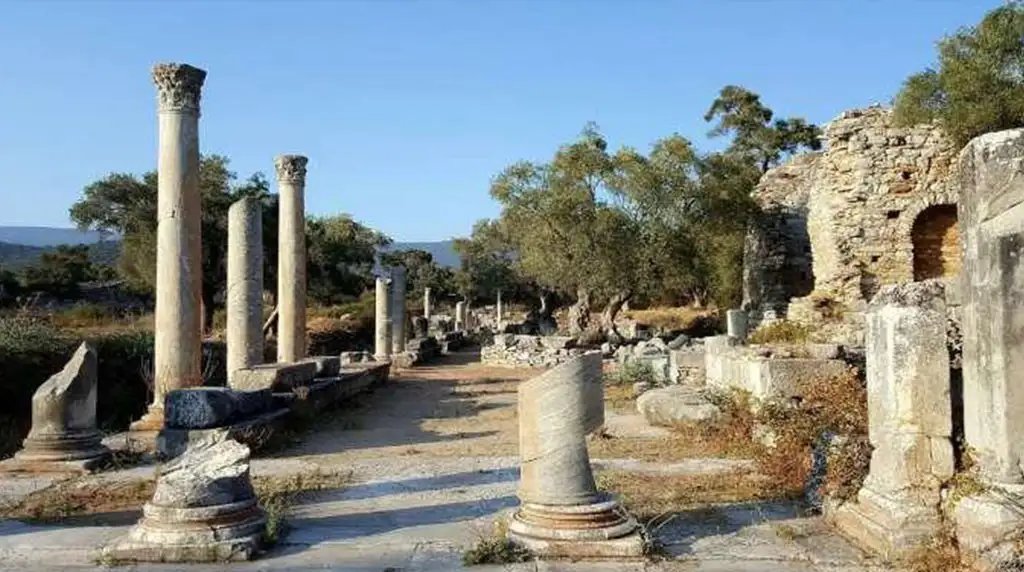
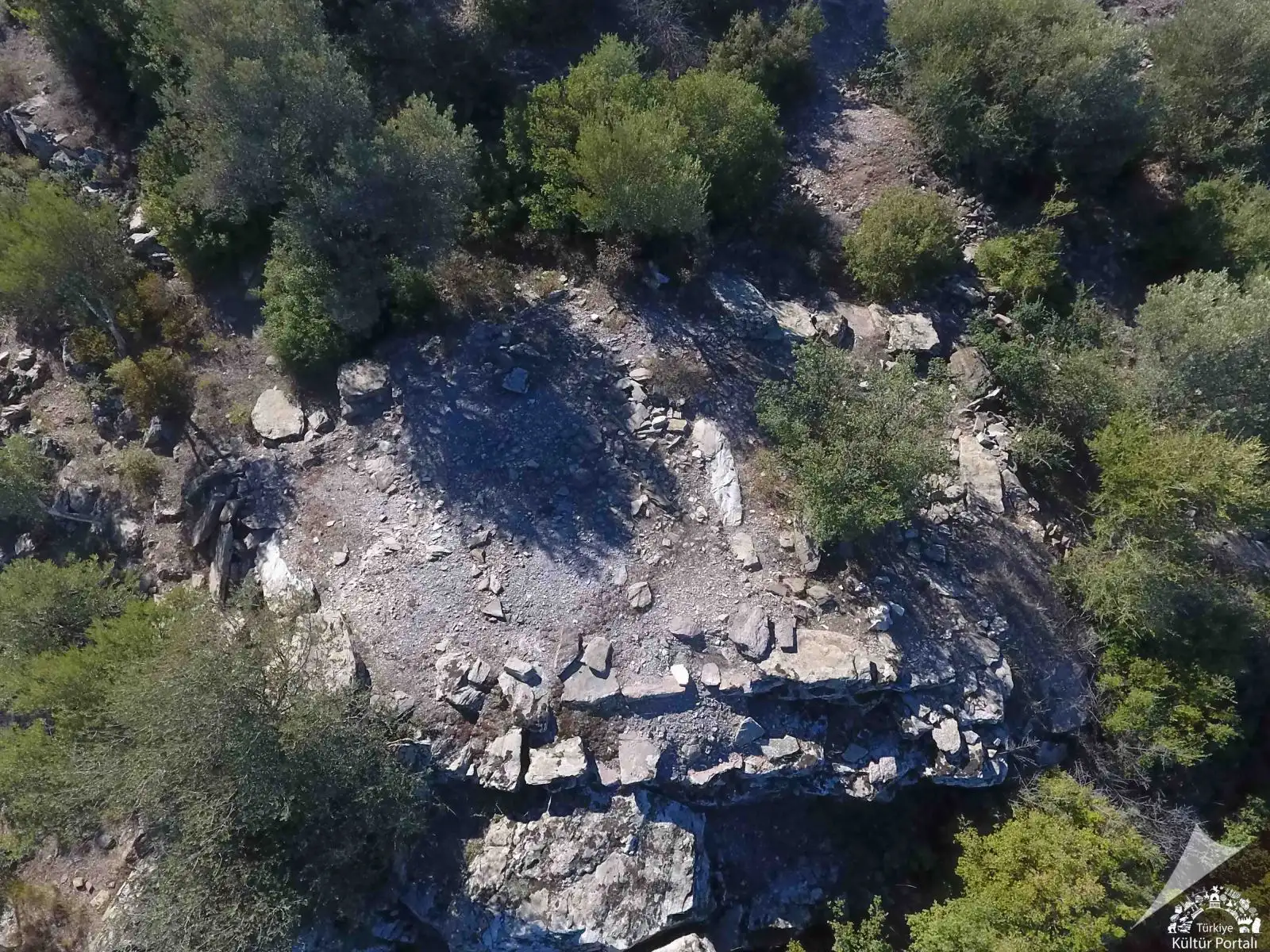
Labranda was a sacred area in the mountains north of Milas and was the pilgrimage site of the Carians. Labranda, covered with pine forests and having delicious spring water, was on the Mylasa - Alabanda road, and while being a pilgrimage and visitation site with its grove covered with sacred plane trees and its temple, it was also a lodging place.
Labranda was reached by a marble road starting at Baltali Gate in Mylasa, paved with marble blocks, with a width reaching 5 meters in places. The marble road was built to transport quality Sodra Mountain marbles to Labranda. Since the religious processions going from Mylasa to the temple also used the same road, this road was called the "sacred road."
With the "..nda" suffix in its name, Labranda is one of the ancient Anatolian place names most commonly found in Caria and Lycia. Labranda; labyrinth and labrys, meaning double-headed axe, come from the same root. Today it is generally believed that Labranda and labyrinth mean the place where the labrys is kept. The historian Plutarch, who lived in the 2nd century AD, writes that labrys is a Lydian word.
When the Carians were defeated by the Persians at the Marsyas River in the Ionian revolt, they retreated to the plane grove in Labranda and lost the second battle they fought on this mountain. In the 2nd century BC, the people living in Labranda, just like in the Sinuri temple in Kalınağıl, were incorporated into the political structure of Mylasa.
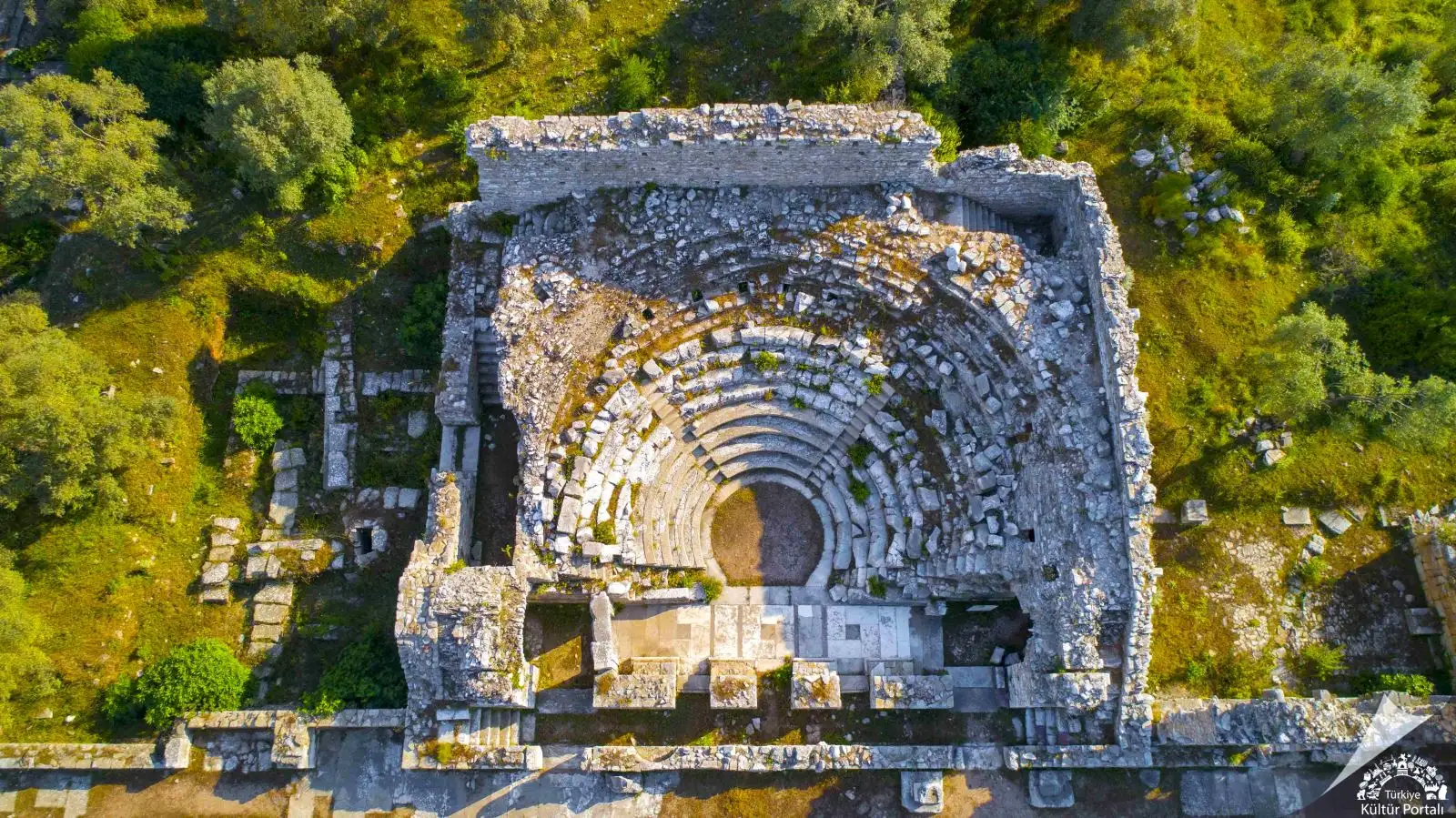
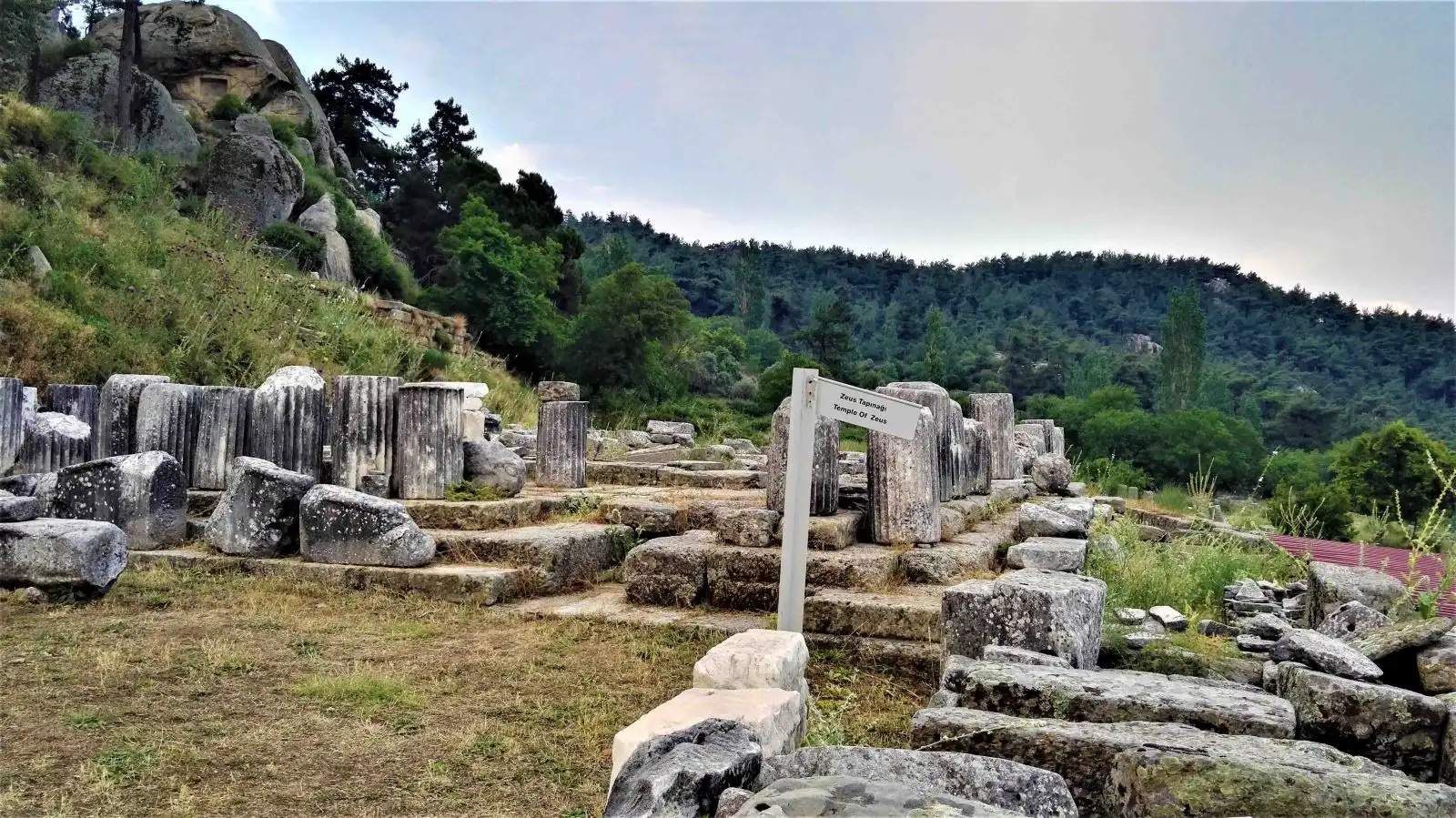
Labranda witnessed a great construction in the 4th century BC, during the time of the Carian satraps. Maussollos (377 - 352 BC) first had retaining walls built for the new and enlarged terraces. At the same time, he had a road paved with marble blocks built to transport quality white marbles from Sodra Mountain to Labranda. Maussollos later had a stoa and a large building (andron) for sacred feasts constructed. In 355/354 BC, during the annual sacrifice festivals in Labranda, Maussollos was subjected to an assassination attempt. While Maussollos escaped at the last moment, the assassin Manitas was killed on the spot. The property of his friend and supporter Thyssos was confiscated and its revenues were transferred to Maussollos. Maussollos died in 352 before the construction of the temple was completed. His brother Idrieus (351 - 344 BC) completed the new Zeus temple. He also had a second feast house (andron) constructed. He had the southern propylon, which was the entrance gate, and the Doric Building, thought to be a fountain structure next to it, constructed. Labranda showed great development during the period of the sons of Hekatomnos.
In Labranda, priests, their families, temple servants and slaves, workers who maintained and repaired sacred structures, those who leased the sacred area lands and collected olives there, and those who grew various agricultural products lived permanently and settled. Thousands of people participated in the annual sacrifice festivals. While musicians played and sang at the festivals, athletes also participated in competitions.
Archaeological excavations in Labranda were first started by Swedish archaeologists in 1948. The excavation of the Zeus temple was completed in the 1949 and 1950 excavations. The excavations, which were interrupted from time to time, are still being continued by Swedish archaeologists.
Our Historical Cities (15)
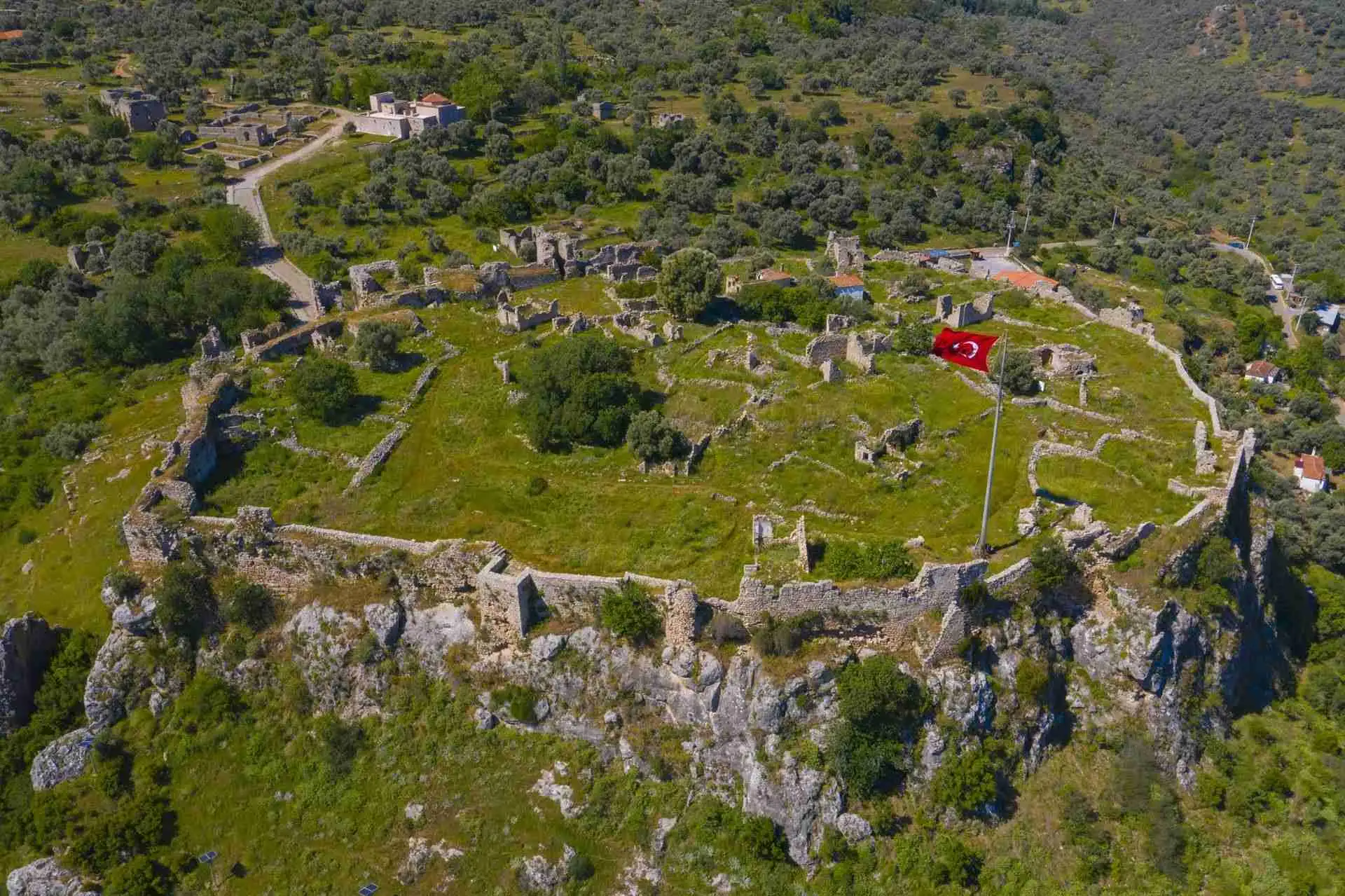
BEÇIN (Pezona, Peçin, Barçın)
A historic settlement rising on a plateau overlooking the Milas Plain, with roots dating back to the Bronze Age. The ancient site served as the capital of the Menteşeoğulları Principality in the 13th century.
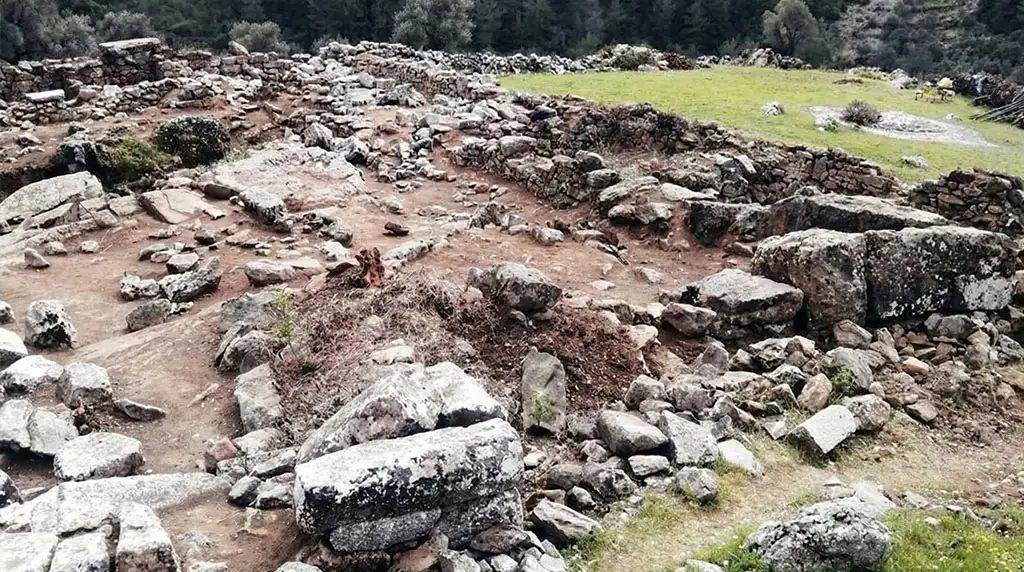
SINURI
A sanctuary built with red marble blocks in the Kalınağıl village of Milas, dedicated to the Carian god Sinuri. An important center of faith since the 4th century BC.
OLYMOS (Kafaca)
An ancient settlement located northwest of Milas, near Kafaca village. The city lost its independence in the 2nd century BC when it merged with Mylasa, known for its temples dedicated to Apollo and Artemisia.
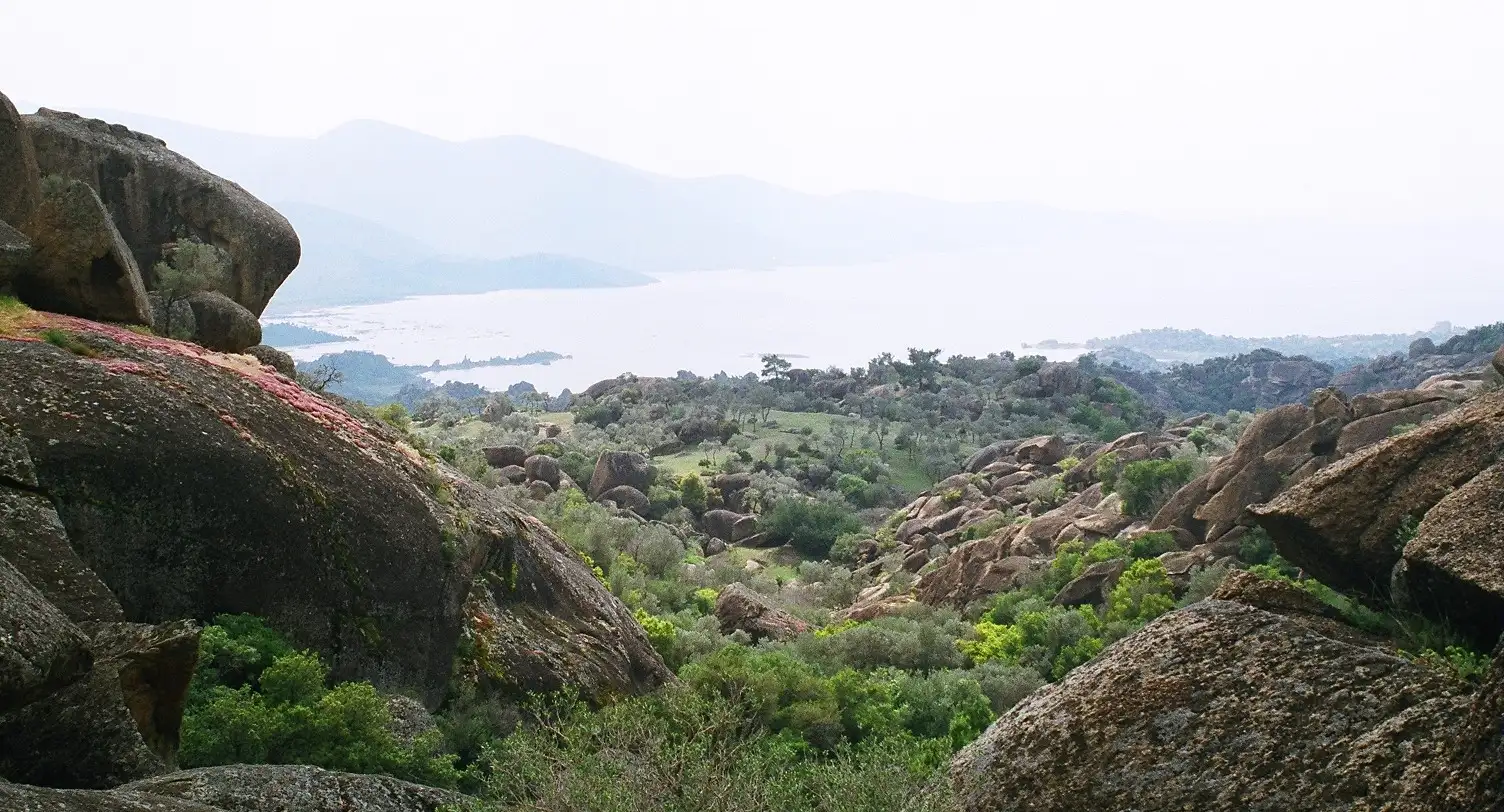
KHALKETOR (Karakuyu)
An ancient settlement founded at the foothills of Karakuyu Mountain, northwest of Milas, which became a member of the Attic-Delian League in the 5th century BC. Known for its strong defensive system with three different fortresses.
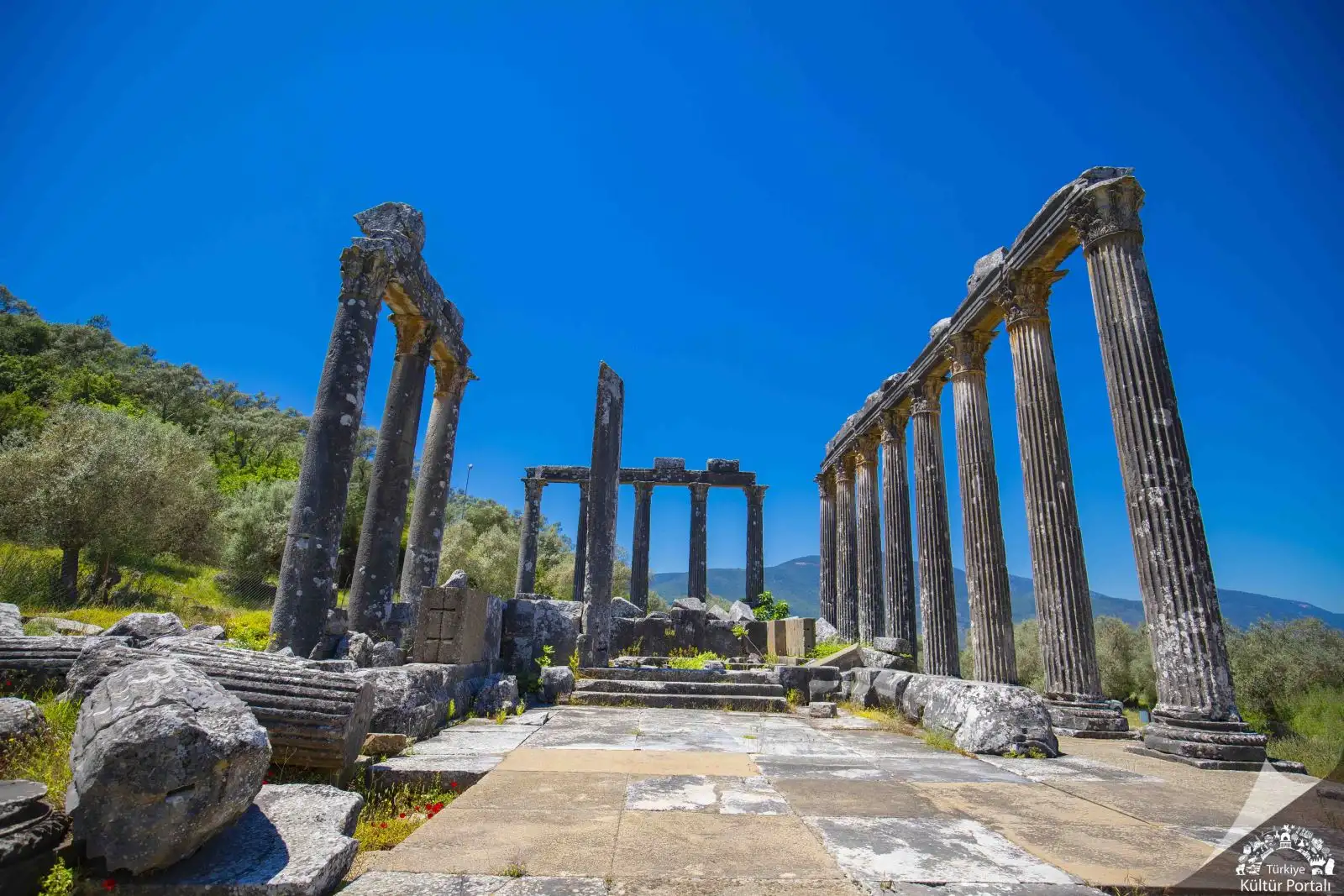
EUROMOS (Ayaklı)
An ancient city on the Milas-Selimiye road, locally known as "Ayaklı" due to its magnificent columns. Home to one of the best-preserved temples in Anatolia, dating from the Roman period.