IASOS (Kıyıkışlacık)
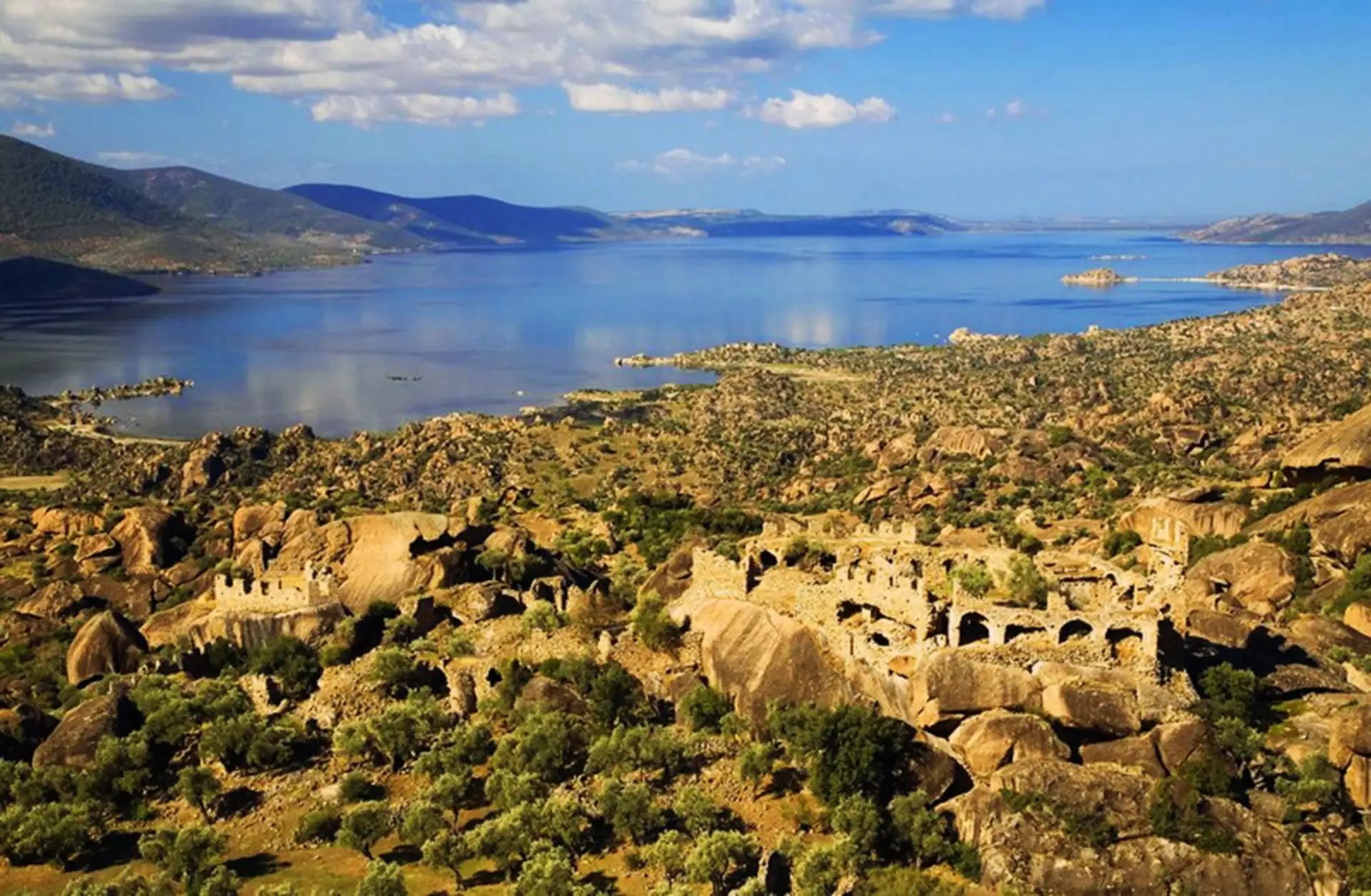
A historic ancient city that was once an island but later became a peninsula, enriched through fishing and maritime trade. Founded by Argive immigrants, Iasos is known for its theater, agora complex, and public bathhouse.
Iasos was established on a small rocky island very close to the mainland and the area opposite this island. This island, with a circumference of about 2.5 kilometers and a height of about 70 meters, later became a peninsula when it was connected to the mainland by filling. Due to its rocky and infertile terrain, the city's people turned more to trade and fishing.
Iasos was founded by immigrants from Argos in Greece, and the city took its name from Iasos, the leader of the immigrants. On a coin from the Roman Imperial period, this person's bearded head is depicted. Around the head is written "founder Iasos." When the immigrants arrived, they encountered resistance from the local population. The immigrants then asked for help from the Milesians, and with their support, they were able to settle here. Thus, with the Milesians who settled here, the Ionian element was also mixed into the population, and Iasos became a Doric - Ionian city.
There is no information about Iasos in ancient sources until the 5th century BC. However, like other Carian cities, it can be assumed that it was under the rule of Lydian king Croesus in the 6th century, then the Persians, and participated in the Ionian revolt in the 5th century. From the mid-5th century, it became a member of the Attic - Delian Sea League. Iasos paid 1 talent tribute to the league around 450 and 3 talents in 425.
Towards the end of the 5th century, Iasos fell into the hands of Amorges, the son of Sardis satrap Pissuthnes who rebelled against the Persian king, and was therefore captured in 412 by the navies of Sparta and its allies, who received Persian help in their struggle against Athens.
Between 394-390, Iasos formed a union with Rhodes, Cnidus, Ephesus, Samos and Byzantium. On the common side of the coins, Heracles strangling snakes while still in the cradle is depicted. This depiction was accepted as a symbol of freedom for the allied cities under Persian, Spartan and Athenian pressure.
With the "King's Peace" made between the Persians and Greek states in 386 BC, all Anatolian cities, and therefore Iasos, were left to the Persians.
During Alexander the Great's invasion of Anatolia, while Miletos was being captured, the Persians prepared a raid on the Macedonian fleet anchored on Lade Island in front of the city. Two Iasian brothers named Gorgos and Minnion joined Alexander's army and gained Alexander's favor.
When the Romans established the Asia province in 129, Iasos was included in this province along with all of Caria. In the Roman imperial period, Iasos became one of the customs outposts of the Asia province and one of the third-degree cities of the empire.
The three great gods of Iasos are Apollo, Artemis and Zeus Megaistos. Coin depictions show Apollo naked, standing with a bow in his left hand and an arrow in his right. Artemis is dressed as a hunter taking an arrow from the quiver behind her.
The walls of Iasos were built in the 4th century BC and were repaired in later periods. The walls were approximately 2,400 meters long. The strongest part of the wall was the southeast corner that formed the mouth of the harbor.
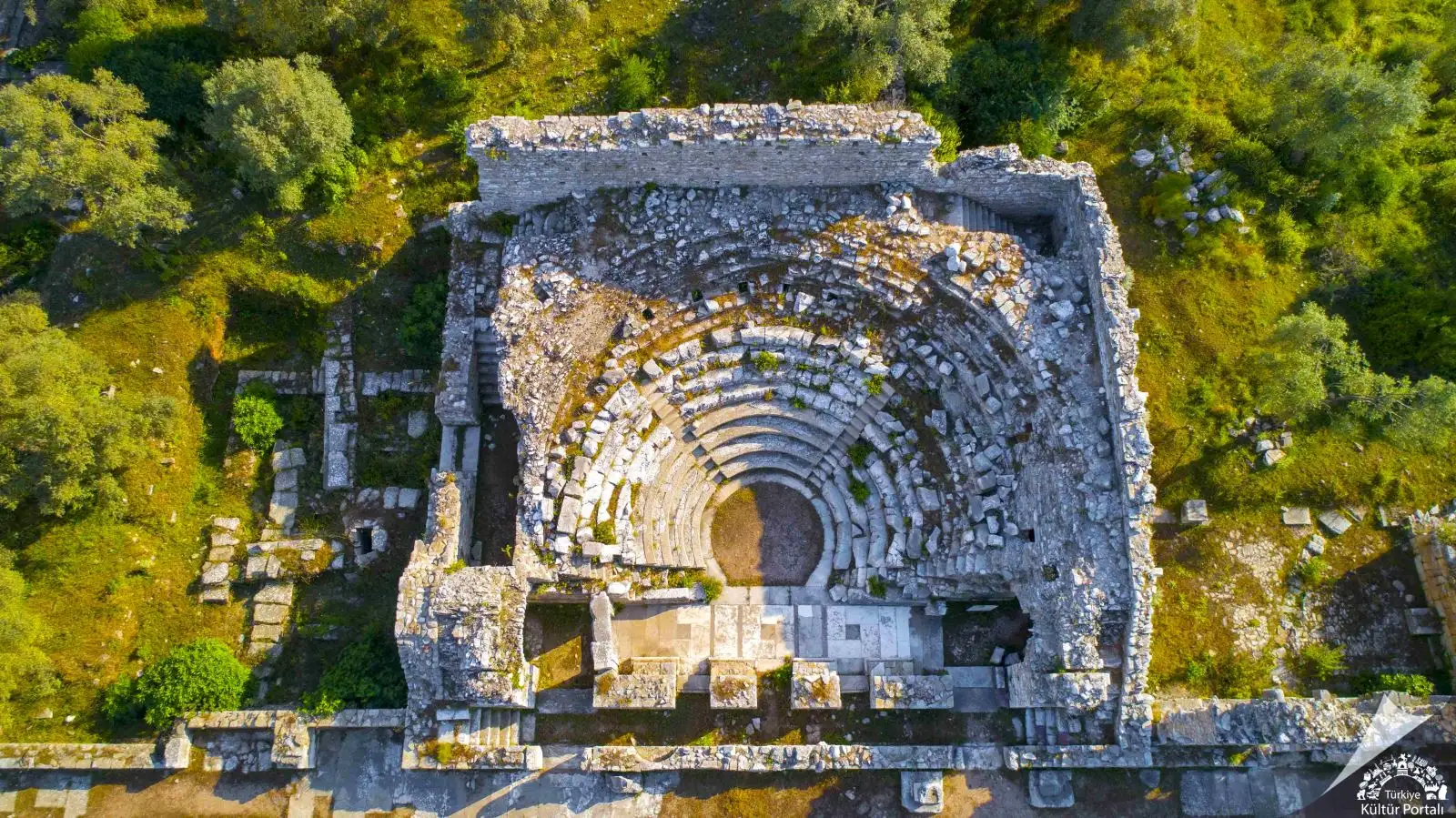
The theater of Iasos is on the northeastern slope of the peninsula. The spectator section, cavea, made with cut blocks with rounded outer surfaces, was strengthened with square buttresses.
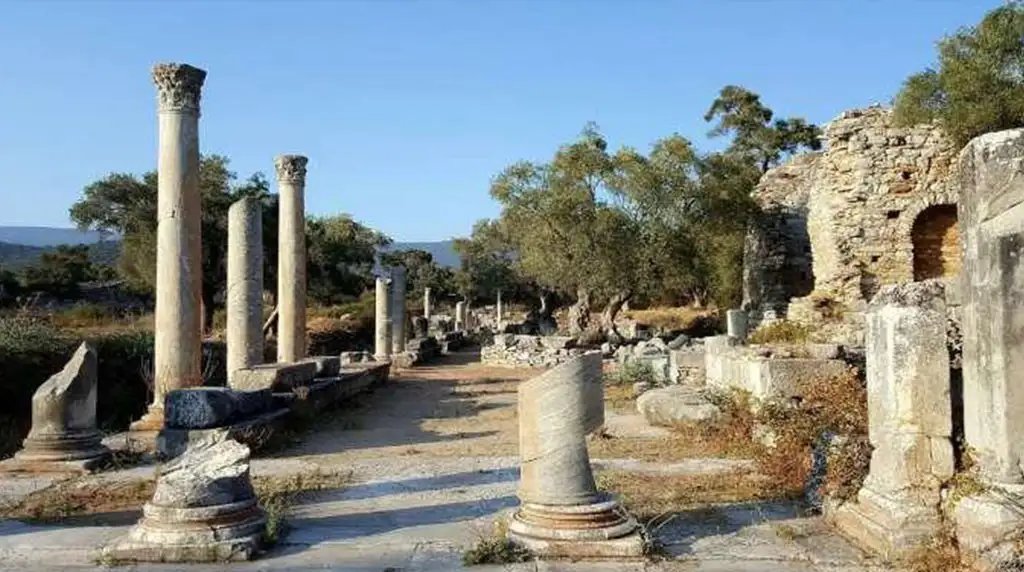
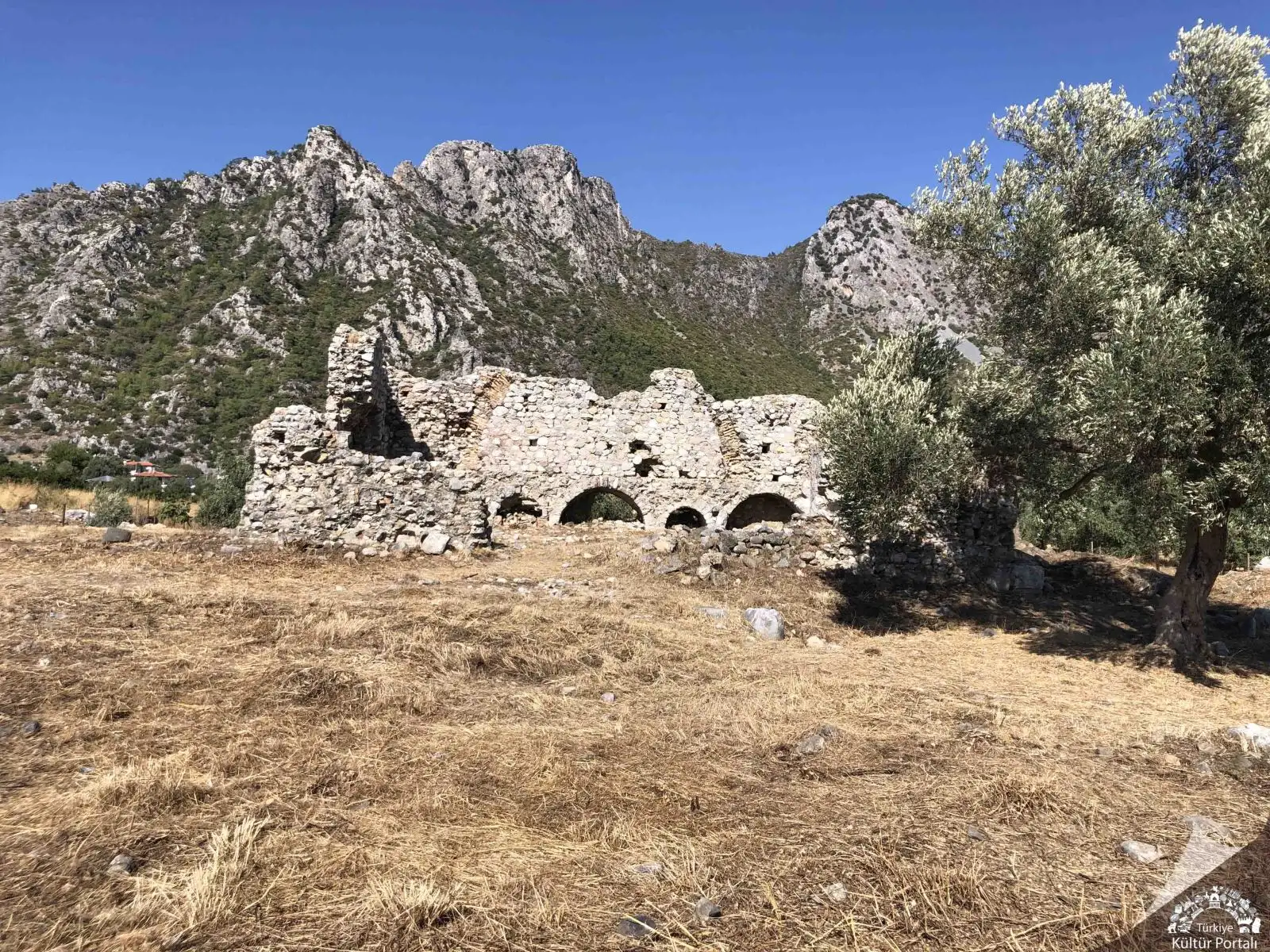
In Iasos, the agora and the city council building (bouleuterion), the monumental tomb called "Fish Market" which has been turned into an open-air museum, and the barracks building are among the important structures of Iasos.
Our Historical Cities (15)
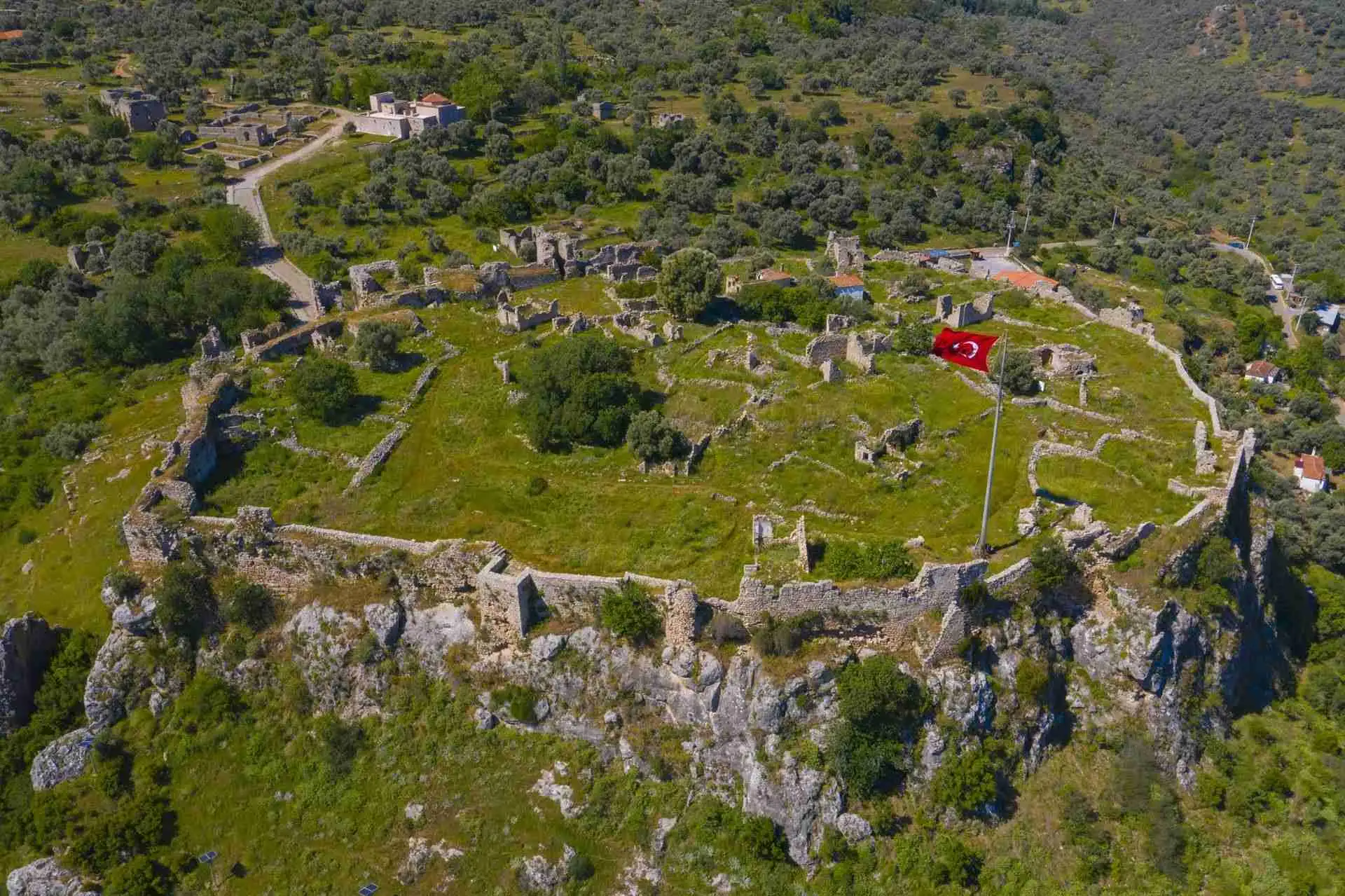
BEÇIN (Pezona, Peçin, Barçın)
A historic settlement rising on a plateau overlooking the Milas Plain, with roots dating back to the Bronze Age. The ancient site served as the capital of the Menteşeoğulları Principality in the 13th century.
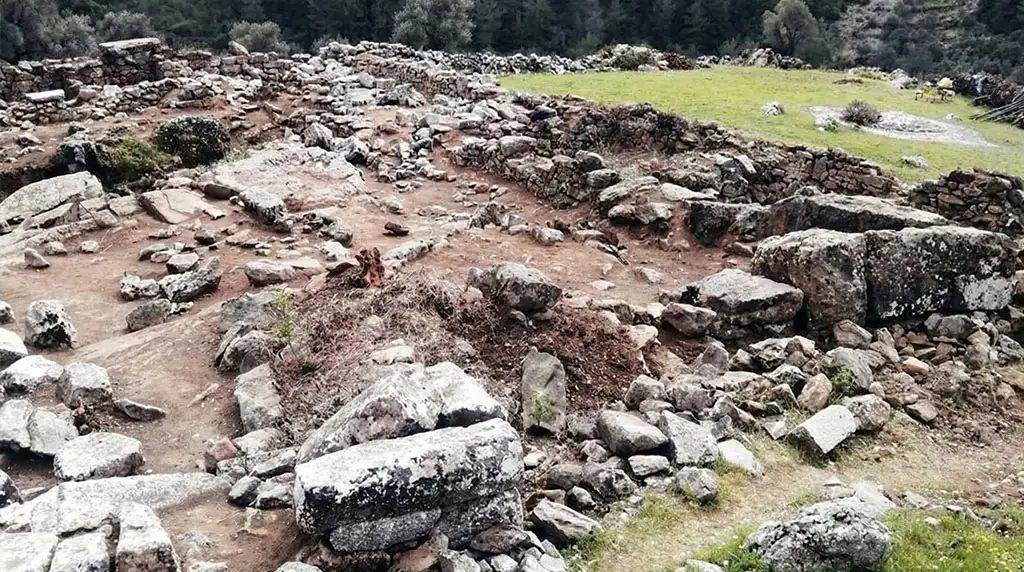
SINURI
A sanctuary built with red marble blocks in the Kalınağıl village of Milas, dedicated to the Carian god Sinuri. An important center of faith since the 4th century BC.
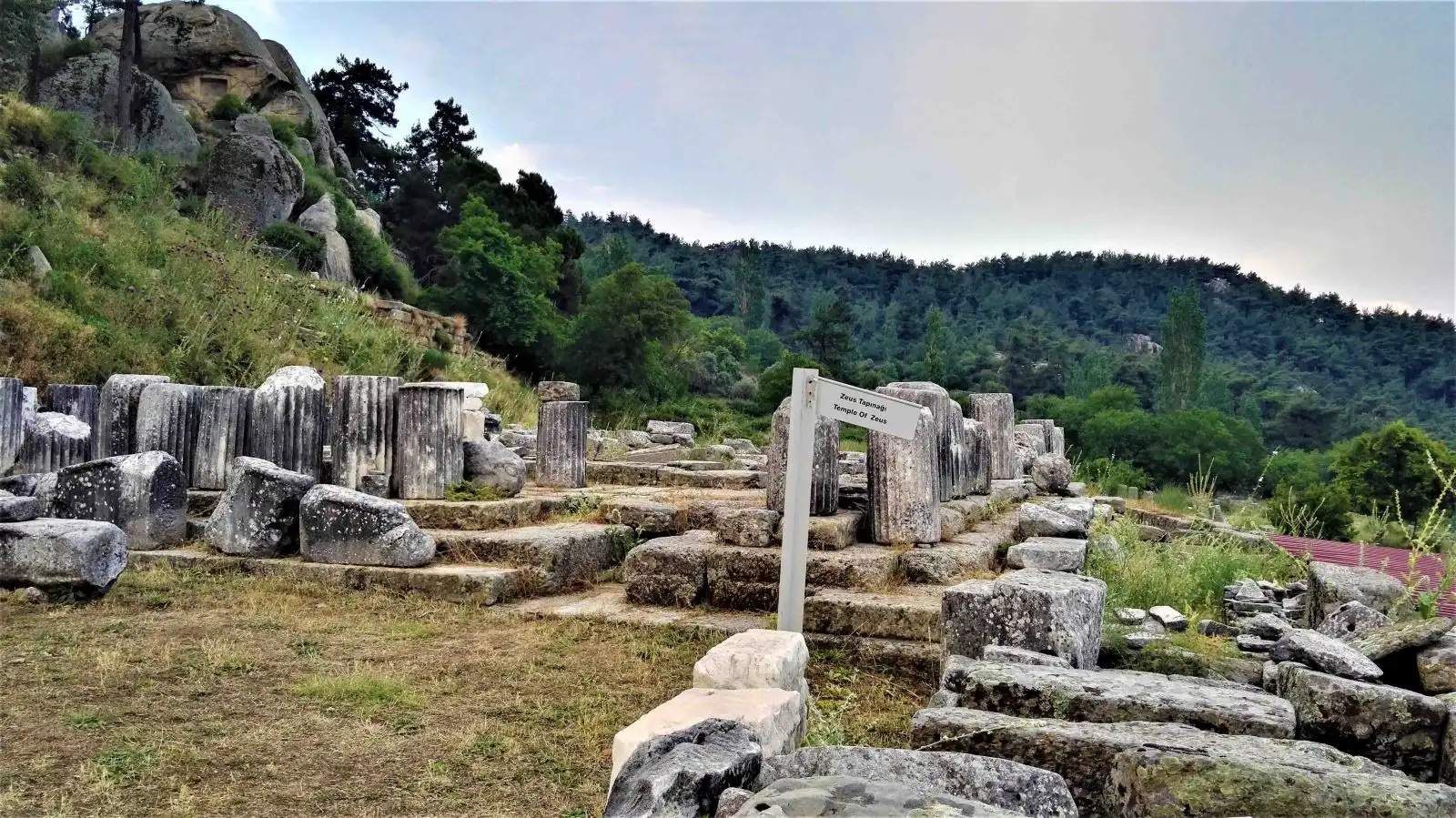
LABRANDA
The most important pilgrimage center of Carian civilization, situated in the mountains north of Milas among pine forests and water sources. Named after the double-headed axe (Labris) motif, connected to Mylasa by the "Sacred Road".
OLYMOS (Kafaca)
An ancient settlement located northwest of Milas, near Kafaca village. The city lost its independence in the 2nd century BC when it merged with Mylasa, known for its temples dedicated to Apollo and Artemisia.
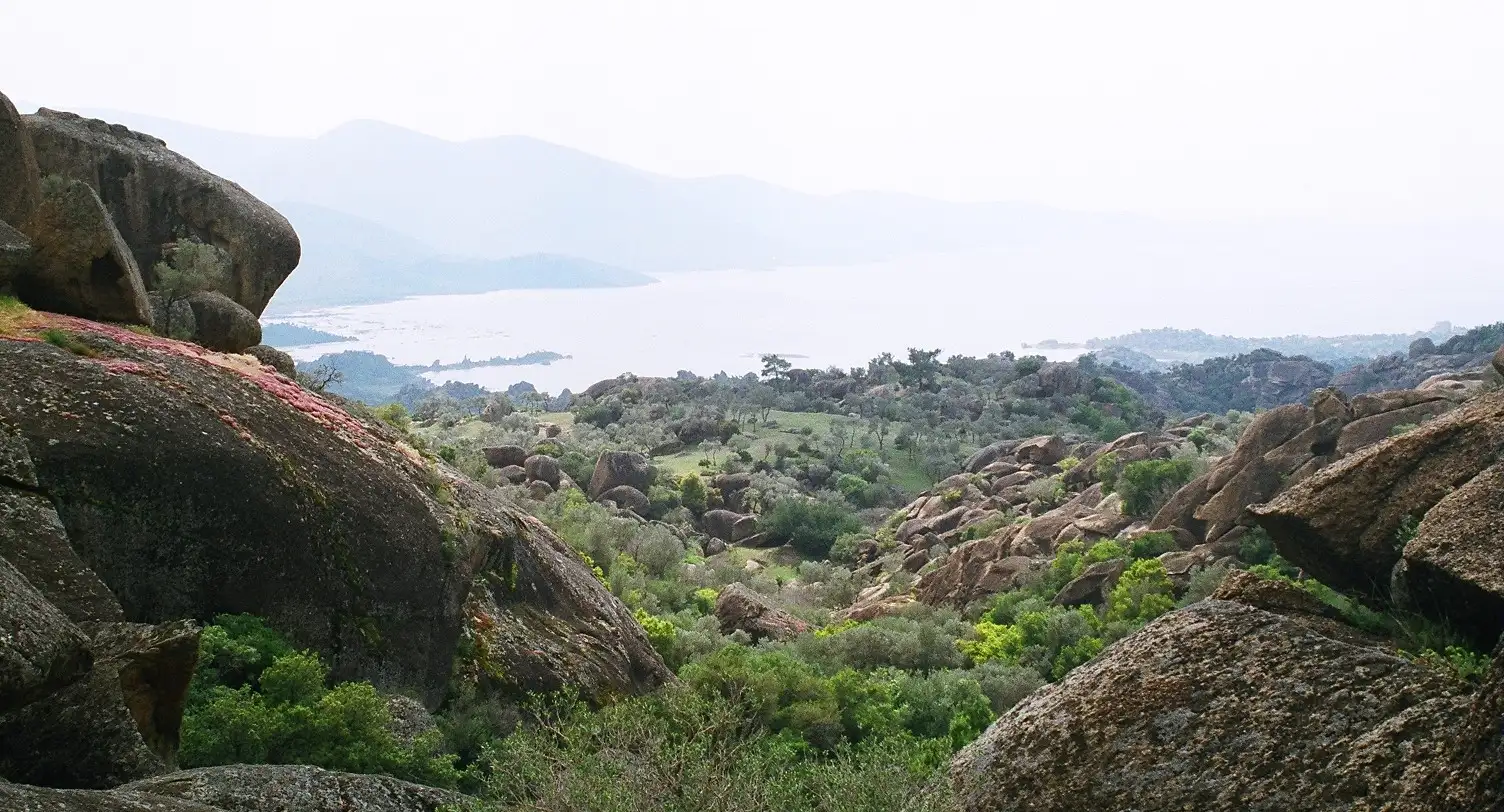
KHALKETOR (Karakuyu)
An ancient settlement founded at the foothills of Karakuyu Mountain, northwest of Milas, which became a member of the Attic-Delian League in the 5th century BC. Known for its strong defensive system with three different fortresses.